How to Lower Cholesterol Naturally: 10 Methods That Work
Ten diet, exercise, and lifestyle methods have clinical trial evidence for lowering LDL cholesterol. This guide ranks them by expected effect size, explains the mechanism behind each, and separates proven methods from popular myths.
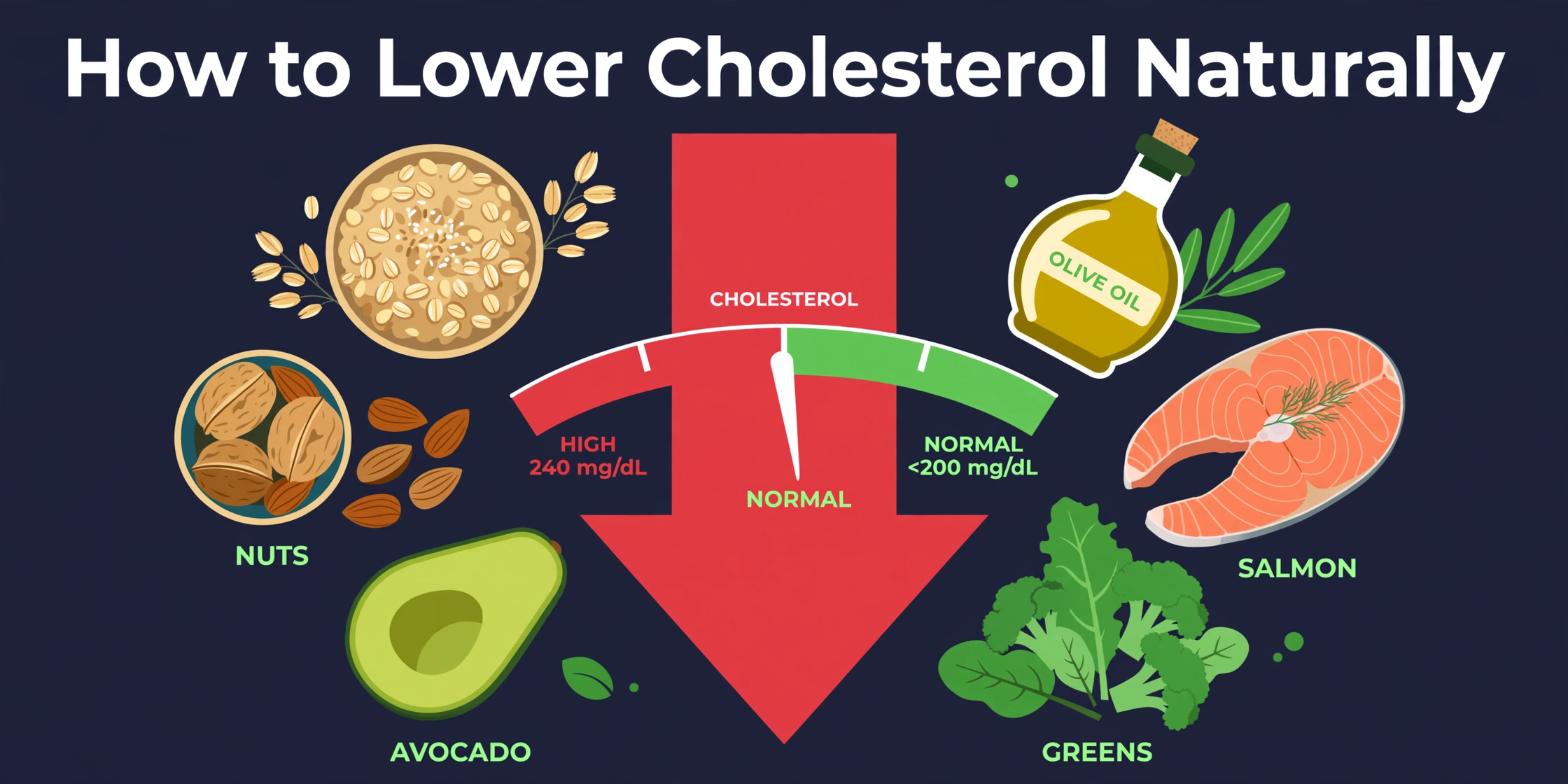
Ten diet, exercise, and lifestyle methods with clinical trial evidence for lowering LDL cholesterol, ranked by expected effect size.
Key Takeaways
- Plant sterols (about 2 g/day) show the largest single-method LDL reduction in trials: roughly 6–15%.
- Replacing saturated fat with unsaturated fat lowers LDL by about 8–10% — one of the most reproducible effects in nutrition trials.
- Soluble fiber, nuts, and soy protein each lower LDL modestly (3–10%), and their effects add up in combination diets.
- Exercise and omega-3s act mainly on triglycerides and HDL rather than LDL; weight loss lowers LDL by about 8 mg/dL per 10 kg.
- Coconut oil and apple cider vinegar lack trial evidence for LDL lowering; when diet alone falls short, guidelines describe clinician-led medication pathways.
Ten diet, exercise, and lifestyle methods have randomized-trial evidence for lowering LDL cholesterol. Expected LDL reductions range from roughly 15% for plant sterols and 8–10% for replacing saturated fat with unsaturated fat down to small single-digit effects for options like green tea and omega-3s, which act mainly on triglycerides.
How LDL Cholesterol Works in the Body
LDL (low-density lipoprotein) particles carry cholesterol from the liver to tissues through the bloodstream. Cells take up these particles through LDL receptors — protein structures on cell surfaces, concentrated in the liver, that bind LDL and pull it out of circulation. The number and activity of these receptors largely determine how quickly LDL is cleared from the blood.
The liver also manufactures cholesterol, producing roughly three-quarters of the body's supply, while the remainder comes from food. The liver balances production and clearance continuously. When receptor activity falls, LDL particles circulate longer and have more opportunity to enter arterial walls. Over time, accumulated LDL contributes to atherosclerotic plaque, the process underlying most heart attacks and strokes.
One of the most important pathways involves bile acids. The liver converts cholesterol into bile acids, which help digest fat. Soluble fiber binds bile acids in the intestine and carries them out of the body, forcing the liver to pull more cholesterol from the blood to manufacture replacements. This bile-recycling loop is the core mechanism behind the fiber and sterol methods described below.
Nearly every method ranked here works by acting on one of two levers: increasing LDL receptor activity so the liver clears more LDL, or reducing the amount of cholesterol entering the bloodstream so less needs clearing. Saturated fat suppresses receptor activity, which is why replacing it raises clearance. Plant sterols block cholesterol absorption in the gut, which reduces the incoming supply. Understanding these two levers makes it easier to see why some methods combine well and others overlap.
LDL values also shift with age; background on typical ranges appears in the guide to normal cholesterol by age. An LDL cholesterol calculator estimates LDL from the numbers on a standard lipid panel.
Soluble Fiber, Plant Sterols, and Nuts
Method 1: Soluble fiber (5–10% LDL reduction)
A meta-analysis of 67 controlled trials by Brown et al. found that each gram of soluble fiber per day reduced LDL cholesterol by about 2.2 mg/dL.1 Typical trial doses of 2–10 grams per day translate to LDL reductions of roughly 5–10%. The effect grows with the starting LDL level — people with higher baseline values tend to see larger absolute drops.
Soluble fiber dissolves in water to form a gel in the digestive tract. That gel binds bile acids and carries them out of the body. The liver then converts more circulating cholesterol into new bile acids, which raises LDL receptor activity and clears more LDL from the blood. This mechanism explains why the effect is consistent across different fiber sources, from oats to psyllium.
The Portfolio diet trial by Jenkins et al. combined soluble fiber with plant sterols, soy protein, and nuts, and reduced LDL by about 28% — a result comparable to the low-dose statin used as the comparison treatment.2 That trial is frequently cited because it tested a food pattern rather than a supplement, and it showed how modest individual effects add up.
| Food (serving) | Soluble Fiber (approx.) |
|---|---|
| Psyllium husk, 1 tablespoon | ~3.5 g |
| Oats, 1 cup cooked | ~2 g |
| Barley, 1 cup cooked | ~2 g |
| Black beans, ½ cup cooked | ~2 g |
| Lentils, ½ cup cooked | ~1.5 g |
| Apple, 1 medium | ~1 g |

Method 2: Plant sterols and stanols (6–15% LDL reduction)
Plant sterols and stanols are compounds found in small amounts in vegetable oils, nuts, seeds, and grains. Their structure resembles cholesterol closely enough that they compete with it for absorption in the intestine. The cholesterol that is blocked from absorption leaves the body instead of entering the bloodstream.
A meta-analysis of randomized controlled trials by AbuMweis et al. reported that daily intakes around 2 grams reduced LDL cholesterol by roughly 8–9%, with higher doses reaching up to about 15%.3 These doses come mainly from fortified foods such as sterol-enriched margarines, yogurts, and orange juice, because ordinary foods contain only small amounts.
Sterols lower LDL without meaningfully changing HDL in most trials. Their effect adds to fiber and dietary pattern changes, which is why the Portfolio trial combined them.2 The 2018 cholesterol guideline lists plant sterols among the dietary components with evidence for LDL lowering.4
Method 3: Nuts (about 5% LDL reduction, dose-dependent)
A systematic review and meta-analysis of 61 trials by Del Gobbo et al. found that nut consumption lowered LDL cholesterol by an average of about 5.8 mg/dL, with larger effects at higher doses and in people with higher baseline LDL.5 Tree nuts such as almonds, walnuts, and pistachios, as well as peanuts, showed similar patterns.
Nuts deliver several LDL-lowering components at once: unsaturated fats, soluble fiber, and plant sterols. That combination explains their consistent effect across trials. The PREDIMED trial, which assigned participants to a Mediterranean diet supplemented with mixed nuts, reduced major cardiovascular events by about 30% compared with a low-fat control diet — an outcome driven by the overall pattern, not by nuts alone.6
Exercise, Weight Loss, and Omega-3s
Method 4: Aerobic exercise (about 2–4% LDL reduction; strongest effects on triglycerides and HDL)
Exercise is one of the most studied lifestyle interventions, and the honest reading of the evidence is that its direct effect on LDL is modest. A meta-analysis by Kodama et al. of aerobic exercise training trials found that HDL cholesterol rose and triglycerides fell, while LDL changes were small — on the order of a few percent.10
That finding does not diminish exercise's role. Triglyceride reduction and HDL improvement are independent cardiovascular risk factors, and exercise improves insulin sensitivity, blood pressure, and body composition. Researchers generally describe exercise as a complement to dietary change rather than a standalone LDL strategy, because the lipid effects are largest when the two are combined.
Method 5: Weight loss (about 8 mg/dL LDL per 10 kg lost)
A meta-analysis by Dattilo and Kris-Etherton found that each 10 kilograms of weight loss was associated with an average LDL reduction of about 8 mg/dL (0.2 mmol/L), alongside larger reductions in triglycerides.11 The relationship is roughly dose-dependent: greater weight loss produces greater lipid improvement.
The mechanism runs through several channels at once. Weight loss reduces the liver's production of very-low-density lipoprotein (VLDL), the precursor particle that becomes LDL, and improves insulin sensitivity, which affects lipid metabolism broadly. Because weight loss amplifies the effects of dietary change, trials that combine the two consistently outperform either approach alone.
Method 6: Omega-3 fatty acids (mainly a triglyceride effect)
Omega-3 fatty acids from fish and fish oil have strong evidence for lowering triglycerides — reductions of 20–30% at doses of 2–4 grams per day are common in trials. Their effect on LDL is a different story: LDL typically falls little, stays flat, or rises slightly at high doses.15
Guidelines and reviews describe omega-3s as a triglyceride therapy, not an LDL therapy. Fish oil is often marketed for general heart health, but the lipid data do not show meaningful LDL lowering. The cardiovascular evidence for omega-3s comes mainly from triglyceride reduction and other pathways rather than from LDL effects.
🧮 Know Your LDL Number
Enter your lipid panel values to estimate your LDL cholesterol and see which range it falls in.
Try the LDL Calculator →Cutting Saturated Fat and Eliminating Trans Fat
Method 7: Replacing saturated fat with unsaturated fat (8–10% LDL reduction)
The type of fat matters more than the total amount for LDL. A presidential advisory from the American Heart Association, reviewing randomized trials, concluded that replacing about 5% of daily calories from saturated fat with polyunsaturated fat lowers LDL cholesterol by roughly 10 mg/dL — an 8–10% reduction for typical starting values.7
The classic meta-analysis by Mensink and Katan showed that saturated fatty acids raise LDL while polyunsaturated fatty acids lower it, and that the total-to-HDL cholesterol ratio improves most when saturated fat is replaced with unsaturated fat rather than with carbohydrate.8 In practical terms, the trials replaced butter, fatty meats, and full-fat dairy with vegetable oils, nuts, and fatty fish.
Saturated fat suppresses LDL receptor activity in the liver, which is why cutting it allows faster LDL clearance. The effect is one of the most reproducible findings in nutrition science, confirmed across dozens of controlled feeding trials. The 2018 cholesterol guideline lists reduced saturated fat intake among the core dietary recommendations for LDL management.4
Method 8: Eliminating trans fat (modest LDL effect; large overall cardiovascular benefit)
Trans fats raise LDL, lower HDL, and increase markers of inflammation — a combination that makes them unusually harmful per calorie. A landmark review by Mozaffarian et al. estimated that each 2% of daily calories from trans fat was associated with a 23% higher risk of coronary heart disease.9
In most high-income countries, trans fat intake has already fallen sharply after regulators removed partially hydrogenated oils from the food supply — the U.S. FDA finalized this removal in 2018. Where intake was historically high, elimination lowered LDL by a few percent and improved the LDL-to-HDL ratio. The remaining exposure comes from processed foods in countries without bans and from ruminant trans fats, which occur naturally at low levels in dairy and meat.
Soy Protein and Other Evidence-Based Options
Method 9: Soy protein (3–5% LDL reduction)
A 1995 meta-analysis by Anderson et al. in the New England Journal of Medicine found that about 25 grams of soy protein per day lowered LDL cholesterol by roughly 12.9 mg/dL in people with elevated cholesterol — about a 3–5% reduction for most starting values.12 The U.S. FDA authorized a health claim for soy protein and coronary heart disease in 1999 based on this evidence base.
Later reviews have been more measured, with some finding smaller effects than the original analysis. Soy appears to work best as a replacement for animal protein — swapping soy for red meat or full-fat dairy removes saturated fat at the same time it adds soy's modest direct effect. The 2018 cholesterol guideline includes soy among dietary components with some evidence for LDL lowering.4
Method 10: Green tea (about 2–3% LDL reduction)
A meta-analysis of 14 randomized controlled trials by Zheng et al. found that green tea intake lowered both total and LDL cholesterol, with the largest effects in people with higher baseline values.13 The average reduction was small — roughly 2–3% — and appeared stronger with longer intervention periods.
Catechins, the polyphenols in green tea, are the proposed active compounds, possibly acting through reduced cholesterol absorption and increased excretion. The evidence is real but modest, which places green tea at the lower end of this ranking. It does not compare with the larger effects of fiber, sterols, or fat substitution.
All 10 methods ranked by expected LDL reduction
| Rank | Method | Expected LDL Reduction | Key Evidence |
|---|---|---|---|
| 1 | Plant sterols/stanols | 6–15% | Meta-analysis of RCTs, ~2 g/day3 |
| 2 | Replace saturated fat with unsaturated fat | 8–10% | AHA presidential advisory; Mensink & Katan meta-analysis7, 8 |
| 3 | Soluble fiber | 5–10% | Meta-analysis of 67 trials1 |
| 4 | Nuts | ~5% (dose-dependent) | Meta-analysis of 61 trials5 |
| 5 | Weight loss | ~8 mg/dL per 10 kg | Meta-analysis11 |
| 6 | Soy protein | 3–5% | Meta-analysis; FDA health claim12 |
| 7 | Aerobic exercise | ~2–4% | Meta-analysis of training trials10 |
| 8 | Eliminate trans fat | ~2–4% (larger where intake was high) | Review of trials and cohorts9 |
| 9 | Green tea | ~2–3% | Meta-analysis of 14 RCTs13 |
| 10 | Omega-3 fatty acids | ~0% (triglyceride effect) | Pooled cohort and trial data15 |
Ranges are approximate and depend on dose, baseline LDL, and adherence. Combinations exceed any single method — the Portfolio diet trial, which stacked fiber, sterols, soy, and nuts, cut LDL by about 28%.2

What Doesn't Lower Cholesterol
Coconut oil. A systematic review by Eyres et al. found that coconut oil raises LDL cholesterol compared with unsaturated vegetable oils.16 Despite its marketing as a health food, coconut oil is about 90% saturated fat, and trials consistently show LDL increases when it replaces unsaturated fats. It lowers LDL only in comparison with butter — not a meaningful standard, since both raise it relative to unsaturated oils.
Apple cider vinegar. No published randomized trial has demonstrated a consistent LDL-lowering effect for vinegar. Small studies have examined vinegar and body weight or blood sugar, but the cholesterol evidence is absent. Claims that a daily spoonful dissolves cholesterol have no trial support.
"Superfood" claims without trials. Many foods are marketed for cholesterol on the basis of antioxidant content or traditional use rather than measured lipid outcomes. The methods ranked above earned their place through randomized controlled trials with lipid endpoints. Foods without such trials may still be nutritious, but their cholesterol effects are unproven — and unproven is not the same as effective.
Cholesterol-lowering spreads without sterols. Some spreads advertise heart benefits from unsaturated fats alone. These can help when they replace butter, but their effect is smaller than sterol-fortified versions.3 Checking the label for actual plant sterol content distinguishes the two, since only the fortified versions deliver the trial-tested dose.

When Lifestyle Changes Are Not Enough
Diet and lifestyle lower LDL by meaningful amounts, but the combined effect has a ceiling. The Portfolio diet trial reached about 28% — impressive for food, yet below what many people need to reach target levels. Guidelines describe this gap openly: lifestyle measures are the foundation, and clinicians evaluate additional therapy when LDL remains above risk-based thresholds.4
The 2018 cholesterol guideline describes clinician-led pathways keyed to LDL levels and risk categories. For LDL of 190 mg/dL or higher, the guideline describes evaluation for high-intensity statin therapy. For adults aged 40–75 with diabetes, it describes moderate- to high-intensity statin pathways depending on risk factors. For primary prevention with 10-year ASCVD risk of 20% or higher, high-intensity statin evaluation is described; for risk of 7.5–19.9%, the described pathway is a clinician-patient discussion weighing risk-enhancing factors.4 How those risk categories are defined is explained in the guide to what counts as a good heart score.
These pathways exist because statins have the largest randomized-trial evidence base of any LDL intervention. A prospective meta-analysis of 14 statin trials by the Cholesterol Treatment Trialists' Collaboration found that each 1 mmol/L (about 39 mg/dL) reduction in LDL lowered the risk of major vascular events by roughly 21%.14 No dietary method has produced a comparable event-reduction trial record.
Lifestyle changes and medication are not competing choices in the guideline framework. The guideline describes lifestyle measures as continuing alongside pharmacologic therapy, because diet affects blood pressure, weight, triglycerides, and diabetes risk in addition to LDL.4 People taking statins still show the dietary effects measured in the trials above. The Heart Score Calculator site's ASCVD tool uses these same guideline risk categories to estimate 10-year cardiovascular risk.
🧮 Track Your LDL Progress
Rechecking lipids after dietary changes shows how much your LDL has moved. Estimate your number first.
Try the LDL Calculator →Frequently Asked Questions
How fast can diet lower cholesterol?
Which food lowers LDL the most?
Can exercise alone lower cholesterol?
Are eggs bad for cholesterol?
Do I still need cholesterol medication?
How often should I recheck my cholesterol?
Sources
- Brown L, Rosner B, Willett WW, Sacks FM. Cholesterol-lowering effects of dietary fiber: a meta-analysis. Am J Clin Nutr. 1999;69(1):30-42. DOI: 10.1093/ajcn/69.1.30
- Jenkins DJA, Kendall CWC, Marchie A, et al. Effects of a dietary portfolio of cholesterol-lowering foods vs lovastatin on serum lipids and C-reactive protein. JAMA. 2003;290(4):502-510. DOI: 10.1001/jama.290.4.502
- AbuMweis SS, Barake R, Jones PJH. Plant sterols/stanols as cholesterol lowering agents: a meta-analysis of randomized controlled trials. Food Nutr Res. 2008;52:1811. DOI: 10.3402/fnr.v52i0.1811
- Grundy SM, Stone NJ, Bailey AL, et al. 2018 AHA/ACC/AACVPR/AAPA/ABC/ACPM/ADA/AGS/APhA/ASPC/NLA/PCNA Guideline on the Management of Blood Cholesterol. Circulation. 2019;139(25):e1082-e1143. DOI: 10.1161/CIR.0000000000000625
- Del Gobbo LC, Falk MC, Feldman R, et al. Effects of tree nuts and peanuts on the lipid and lipoprotein profile: a systematic review and meta-analysis of 61 trials. Am J Clin Nutr. 2015;102(6):1347-1355. DOI: 10.3945/ajcn.115.110965
- Estruch R, Ros E, Salas-Salvadó J, et al; PREDIMED Study Investigators. Primary prevention of cardiovascular disease with a Mediterranean diet supplemented with extra-virgin olive oil or nuts. N Engl J Med. 2018;378(25):e34. DOI: 10.1056/NEJMoa1800389
- Sacks FM, Lichtenstein AH, Wu JHY, et al. Dietary fats and cardiovascular disease: a presidential advisory from the American Heart Association. Circulation. 2017;136(3):e1-e23. DOI: 10.1161/CIR.0000000000000510
- Mensink RP, Katan MB. Effect of dietary fatty acids on serum lipids and lipoproteins: a meta-analysis of 27 trials. Arterioscler Thromb. 1992;12(8):911-919. DOI: 10.1161/01.ATV.12.8.911
- Mozaffarian D, Katan MB, Ascherio A, et al. Trans fatty acids and cardiovascular disease. N Engl J Med. 2006;354(15):1601-1613. DOI: 10.1056/NEJMra054035
- Kodama S, Tanaka S, Saito K, et al. Effect of aerobic exercise training on serum levels of high-density lipoprotein cholesterol: a meta-analysis. Arch Intern Med. 2007;167(10):999-1008. DOI: 10.1001/archinte.167.10.999
- Dattilo AM, Kris-Etherton PM. Effects of weight reduction on blood lipids and lipoproteins: a meta-analysis. Am J Clin Nutr. 1992;56(2):320-328. DOI: 10.1093/ajcn/56.2.320
- Anderson JW, Johnstone BM, Cook-Newell ME. Meta-analysis of the effects of soy protein intake on serum lipids. N Engl J Med. 1995;333(5):276-282. DOI: 10.1056/NEJM199507273330502
- Zheng XX, Xu YL, Li SH, et al. Green tea intake lowers fasting serum total and LDL cholesterol in adults: a meta-analysis of 14 randomized controlled trials. Am J Clin Nutr. 2011;94(2):601-610. DOI: 10.3945/ajcn.110.010926
- Baigent C, Keech A, Kearney PM, et al; Cholesterol Treatment Trialists' (CTT) Collaborators. Efficacy and safety of cholesterol-lowering treatment: prospective meta-analysis of data from 90,056 participants in 14 randomised trials of statins. Lancet. 2005;366(9493):1267-1278. DOI: 10.1016/S0140-6736(05)67394-1
- Del Gobbo LC, Imamura F, Aslibekyan S, et al. ω-3 polyunsaturated fatty acid biomarkers and coronary heart disease: pooling project of 19 cohort studies. JAMA Intern Med. 2016;176(8):1155-1166. DOI: 10.1001/jamainternmed.2016.2925
- Eyres L, Eyres MF, Chisholm A, Brown RC. Coconut oil consumption and cardiovascular risk factors in humans. Nutr Rev. 2016;74(4):267-280. DOI: 10.1093/nutrit/nuw002
Editorial review: This article was reviewed by the Heart Score Calculator Editorial Team on October 18, 2026. The professional name "Dr. Heart" identifies this editorial work and does not replace advice, diagnosis or treatment from a licensed healthcare professional.