Biological Age Calculator:
Discover Your True
Biological Age Free
Your chronological age tells you how long you have been alive. Your biological age tells you how well your body is actually functioning — and it can be years younger or older than your birth certificate suggests. Use this free biological age calculator to find out where you really stand.
Biological age measures how old your cells, organs, and tissues function — based on biomarkers and lifestyle — rather than how many years you have lived. Research consistently shows biological age is a stronger predictor of disease risk and longevity than your chronological age. Lifestyle factors control 70–80% of your biological aging rate.
⚠️ This tool provides an educational estimate only. It is not a clinical diagnosis. Consult a qualified healthcare professional before making any medical decisions.
Your Biological Age Assessment
Evidence-BasedWhat Is Biological Age? Chronological Age vs Biological Age Explained

Your chronological age is simply the number of years since your birth — a fixed number that grows regardless of how you live. Your biological age, by contrast, is a measure of how well your body is actually functioning at the cellular and organ level. It reflects the cumulative impact of your genetics, lifestyle choices, environmental exposures, and health history on how your body ages.
Think of chronological age as the odometer on a car — it tells you how many miles have passed. Biological age is the engine diagnostic — it tells you whether those miles have been hard or easy, and what life expectancy your vehicle realistically has left.
Two people born on the same day can have biological ages a decade or more apart. A 50-year-old who exercises regularly, eats well, and manages stress may have the cellular health of a 40-year-old. Conversely, a 50-year-old who smokes heavily, sleeps poorly, and lives with chronic stress may biologically function more like a 62-year-old. This difference is not theoretical — it is backed by decades of peer-reviewed research from institutions including the National Institute on Aging (NIA), the Karolinska Institute, and the University of California San Diego.
| Feature | Chronological Age | Biological Age |
|---|---|---|
| Definition | Years since birth | How well your body functions |
| Can it change? | ✗ Fixed | ✓ Modifiable |
| Lifestyle influence | ✗ None | ✓ 70–80% |
| Disease risk predictor | Moderate | Stronger |
| Measured by | Birth certificate | Biomarkers, lifestyle, epigenetics |
| Can be reversed? | ✗ No | ✓ Yes, with interventions |
How Is Biological Age Calculated? Methods Explained
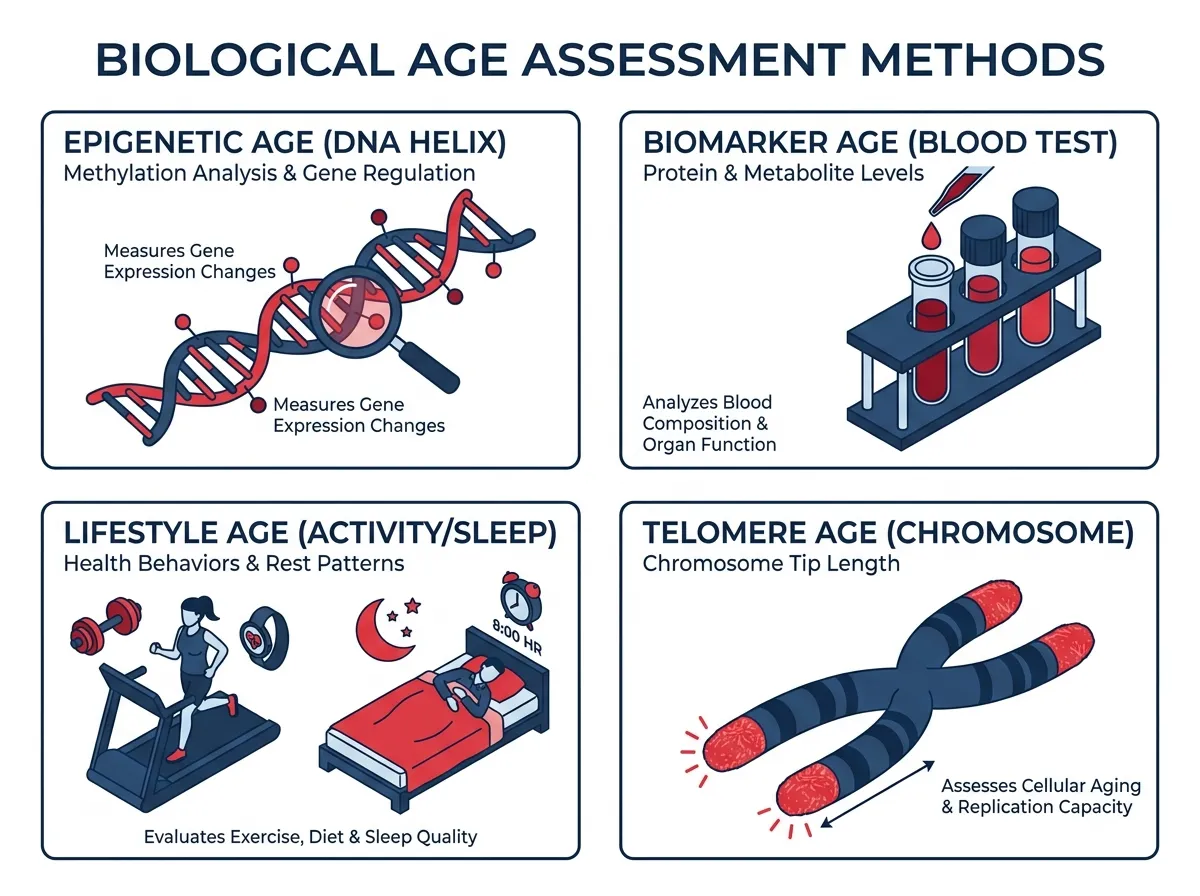
Understanding how to calculate biological age requires knowing that there is no single universally agreed-upon formula. Several validated methods exist, each measuring different dimensions of biological aging. Our free calculator uses a well-established lifestyle and biometric modifier model — the most accessible approach for estimating biological age online without blood tests. Because your biological aging rate is deeply connected to your cardiovascular health, we highly recommend pairing these results with a full assessment from our primary Heart Score Calculator.
Measures DNA methylation patterns across hundreds of CpG sites. The Horvath clock and PhenoAge model (Levine, 2018) are the most validated. Mean error of 2.8–4.9 years. Requires a blood or saliva sample.
Clinical Lab RequiredDeveloped by Dr. Morgan Levine and colleagues at Yale. Uses 9 routine blood values including albumin, creatinine, CRP, glucose, and white cell count to calculate a phenotypic age that predicts mortality risk.
Blood Test NeededUses inputs like BMI, blood pressure, exercise, sleep, stress, diet, and smoking status. Each factor is assigned an age modifier based on population studies. Best for at-home use. This is our calculator's method.
Free · No Blood TestTelomeres — the protective caps on chromosomes — shorten with each cell division. Shorter telomeres correlate with older biological age. This test requires a blood sample and specialist laboratory analysis.
Specialist TestThe formula our calculator uses follows the general structure validated across multiple population studies: Biological Age = Chronological Age + Σ (Lifestyle & Health Modifiers). Each modifying factor is drawn from research linking it to mortality risk and cellular aging markers. Factors that improve longevity (such as regular exercise or optimal BMI) subtract years; risk factors (like heavy smoking or high blood pressure) add years.
What Factors and Biomarkers Affect Your Biological Age?
Decades of longevity research have identified the key drivers of biological aging. Genetics account for approximately 20–30% of the variation in biological age between individuals. The remaining 70–80% is driven by modifiable lifestyle and environmental factors — meaning you have substantial control over your biological aging rate at any age.
How Each Factor Influences Your Biological Age
Physical Activity is arguably the single most powerful modifiable factor. Research published in the British Journal of Sports Medicine found that adults who meet the WHO's 150-minute weekly exercise guidelines have biological ages 3–9 years younger than sedentary peers. Exercise improves telomere length, reduces inflammatory markers, and enhances mitochondrial function — all direct biological aging pathways.
Sleep is when your body performs critical cellular repair, protein synthesis, and neurological consolidation. Adults chronically sleeping fewer than 6 hours per night show accelerated DNA methylation aging. Conversely, consistent 7–9 hours of quality sleep is associated with significantly younger biological age across multiple cohort studies.
Chronic stress elevates cortisol, which degrades telomeres, promotes systemic inflammation, and dysregulates immune function — all of which drive cellular aging. Studies from UCSF's Human Performance Center found that caregivers under chronic stress had telomeres 9–17 years shorter than low-stress controls of the same chronological age.
Smoking is the most dramatic lifestyle accelerant of biological aging. Heavy smokers can accumulate up to 7–8 additional biological years compared to non-smokers, according to analyses using the Horvath epigenetic clock. The good news: biological clock reversal after quitting smoking begins within months and continues for years.
How to Reduce Your Biological Age Naturally
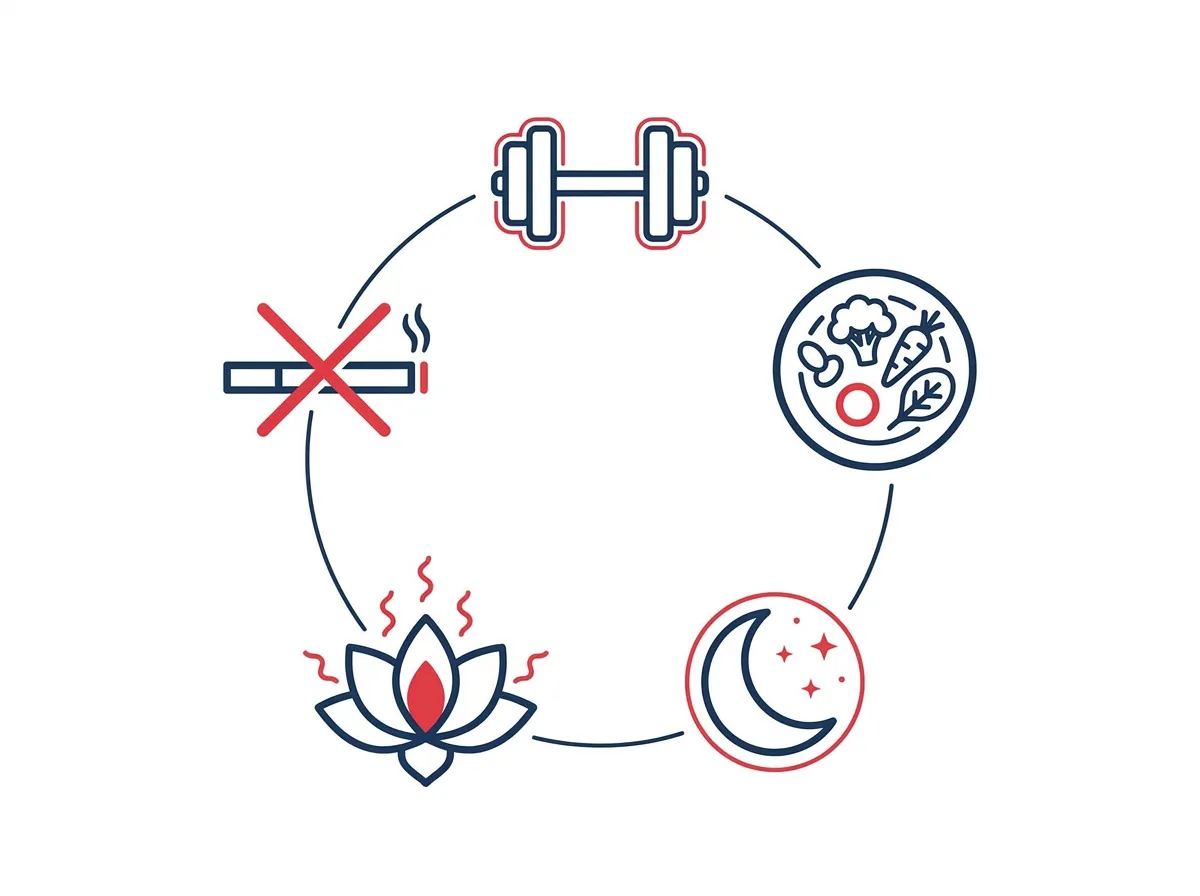
Unlike chronological age, biological age is genuinely reversible through targeted lifestyle interventions. Multiple well-controlled studies — including the landmark TRIIM trial published in Aging Cell — have demonstrated measurable biological age reversal in humans. Here are the most evidence-backed strategies:
150 minutes of aerobic exercise weekly combined with 2–3 sessions of resistance training can reduce biological age by 3–5 years. Cardio improves VO2 max while resistance training preserves muscle mass — both are independent longevity predictors.
The Mediterranean diet — emphasising vegetables, legumes, whole grains, fish, and olive oil — is the most studied dietary pattern for slowing biological aging. A 2020 meta-analysis in BMC Medicine linked adherence to 1.5 fewer biological aging years.
Going to bed and waking at consistent times regulates circadian biology, which governs DNA repair, hormone secretion, and immune function. Even without changing total sleep hours, improved consistency measurably lowers biological age markers.
Regular mindfulness meditation has been shown to reduce cortisol levels, lower CRP (inflammatory marker), and in one UCSF study, increase telomerase activity — the enzyme that lengthens and protects telomeres — by 43%.
Stopping smoking at any age produces biological aging reversal. Research shows that ex-smokers' biological age begins converging toward never-smoker levels within 1–2 years of quitting, with continued improvement over a decade.
Social isolation is a biological stressor that activates inflammatory pathways and accelerates aging at rates comparable to smoking 15 cigarettes per day, according to a landmark Brigham Young University meta-analysis.