Home / Conversion Tools / Liquid Dosage Calculator
5 Calculation Modes · 20+ Medication Presets · Safety Dose Check

Liquid Dosage Calculator:
mg to mL, Weight-Based,
Pediatric & Veterinary

Whether you need to calculate a liquid amoxicillin dose for a child, figure out how much liquid ibuprofen to give by weight, work out a Benadryl dose for your dog, or calculate a parenteral injectable volume — this free liquid medication dosage calculator handles all of it in one place. The Heart Score Calculator liquid dosage tool covers five complete calculation modes with 20+ medication presets, shows results in mL, teaspoons, tablespoons, and fluid ounces simultaneously, and includes a built-in safety dose check.

Why This Is the Most Complete Free Liquid Dosage Calculator

Most online liquid medication calculators only handle one formula. Ours gives you 5 complete modes: standard mg-to-mL, weight-based (mg/kg for adults), pediatric age-based rules (Clark's, Young's, Fried's), veterinary pet dosing, and parenteral/IM injectable calculation. Every result shows mL, tsp, tbsp, and fl oz — and a safety bar flags when a calculated dose approaches or exceeds known maximum limits.

5
Calc Modes
20+
Medication Presets
4
Output Units
Free
No Sign-up
⚠️ Medical Safety Warning

This calculator is for educational and reference purposes only. It does not replace a prescription, a pharmacist, or a licensed veterinarian. Always confirm calculated doses with your healthcare provider before administering any medication to yourself, a child, or a pet. Medication errors can be life-threatening.

Liquid Dosage Calculator

Safety Check Included
Human — OTC Human — Rx Veterinary

Enter your prescribed dose in mg and the medication's concentration. Find concentration on the label (e.g. 250mg/5mL = 50mg/mL).

Label says 250mg/5mL? Enter 50. Label says 100mg/5mL? Enter 20.

Calculate total dose from body weight (mg/kg), then convert to mL. Formula: weight × dose rate ÷ concentration.

Uses Clark's (weight-based), Young's (age in years), or Fried's (age in months, infants <2yr) rules to estimate a pediatric dose from the adult dose.

Weight-based liquid dosing for dogs and cats. Use medication presets above or enter custom dose rate and concentration for any pet medication.

Calculate injectable volume for IM, IV, SC, or ID administration. Formula: Volume = Dose (mg) ÷ Drug concentration (mg/mL). For licensed healthcare use.

mL (millilitres)
mL
Teaspoons (tsp)
Tablespoons
Fluid Ounces
Dose Safety Indicator
SafeNear LimitOver Limit
— mL

Always verify the concentration printed on your specific product label. The same medication comes in multiple strengths. Confirm all doses with your prescriber or pharmacist before administering.

Liquid Dosage Calculation Formulas — The Complete Guide

medical calculator infographic
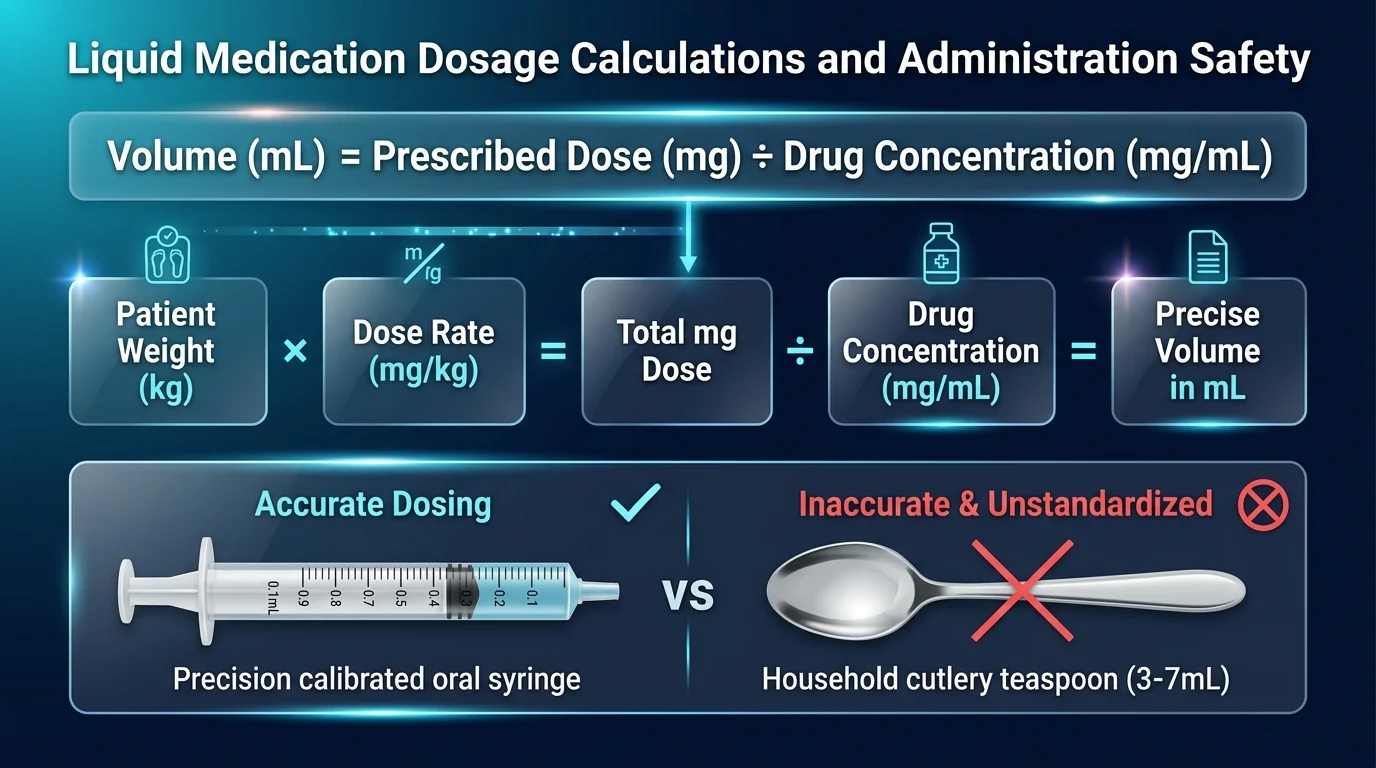
Figure 1: Professional medical calculator infographic. A clean, central 'Dosage Formula Triangle.

Every liquid medication dosage calculation rests on the same fundamental principle: mass (mg) divided by concentration (mg/mL) equals volume (mL). Once you understand this single formula, every other variation — weight-based dosing, pediatric rules, veterinary doses, and parenteral calculations — becomes a straightforward extension of the same logic. The Heart Score Calculator liquid dosage tool applies all of these formulas automatically, but understanding them helps you verify results and catch potential errors.

The Core Liquid Dosage Formula

The fundamental formula for calculating how many millilitres of a liquid medication to administer — whether oral suspension, syrup, or injectable solution — is the same formula nurses learn on day one of pharmacology training, the same formula pharmacists verify before dispensing, and the same one that drives every mode in this calculator.

Core Liquid Dosage Formula (All Routes)
Volume (mL) = Prescribed Dose (mg) ÷ Concentration (mg/mL)
// Amoxicillin 500mg prescribed, label says 250mg/5mL
// Step 1: Concentration = 250 ÷ 5 = 50 mg/mL
// Step 2: Volume = 500 ÷ 50 = 10 mL
// Convert label: mg/5mL → mg/mL by dividing by 5

Weight-Based Liquid Dosage Calculation (mg/kg)

Many liquid medications — especially antibiotics, anti-inflammatories, and pediatric medicines — are prescribed as a dose per kilogram of body weight. This approach accounts for the wide variation in drug distribution between a 10kg toddler and a 90kg adult. Weight-based dosing is also standard for semaglutide and other GLP-1 medications when prescribed through compounding pharmacies.

Weight-Based Dosage Calculation (mg/kg)
Step 1 — Total Dose: Dose (mg) = Weight (kg) × Dose Rate (mg/kg)
Step 2 — Volume: Volume (mL) = Dose (mg) ÷ Concentration (mg/mL)
// 20kg child, amoxicillin 25mg/kg, suspension 50mg/mL
// Step 1: 20 × 25 = 500mg
// Step 2: 500 ÷ 50 = 10 mL per dose

Pediatric Dosage Formulas — Clark's, Young's & Fried's Rules

Historical pediatric dosage rules were developed in an era before weight-based dosing was standard. They remain clinically relevant as quick cross-checks and are still taught in nursing dosage calculations courses. However, modern clinical guidelines generally prefer weight-based (mg/kg) dosing over these age or weight ratio rules — particularly for children under 2 years. Use these rules for educational and reference purposes, and always confirm with a prescriber.

Pediatric Dosage Rules — Clark's, Young's & Fried's
Clark's Rule: Ped Dose = (Weight lb ÷ 150) × Adult Dose
// 50-lb child, adult dose 500mg: (50÷150) × 500 = 166.7mg
Young's Rule: Ped Dose = (Age yr ÷ (Age + 12)) × Adult Dose
// 6-yr child, adult dose 500mg: (6÷18) × 500 = 166.7mg
Fried's Rule: Ped Dose = (Age months ÷ 150) × Adult Dose (infants)
// 12-month infant, adult dose 500mg: (12÷150) × 500 = 40mg

mL to Teaspoons, Tablespoons, and Fluid Ounces

Converting the calculated mL volume into household measurements helps caregivers administer oral liquid medicines accurately — though calibrated syringes are always preferred for any dose under 10mL. Our liquid dosage calculator automatically converts every result into all four common measurements simultaneously.

Liquid Volume Conversion Formulas
Teaspoons (tsp) = mL ÷ 4.929 // 5mL = 1 tsp
Tablespoons (tbsp) = mL ÷ 14.787 // 15mL = 1 tbsp = 3 tsp
Fluid Ounces (fl oz) = mL ÷ 29.574 // 30mL ≈ 1 fl oz
// ⚠ Household spoons are NOT standardised — always use a calibrated syringe

Common Liquid Medications — Concentration Reference Chart

Finding the concentration of your liquid medication is the essential first step in any dosage calculation. The table below lists the most commonly encountered oral liquid medications and their standard concentrations. Always verify against the label of your specific product — the same drug name may come in multiple strengths.

MedicationStandard FormulationConcentration (mg/mL)Typical Use
Acetaminophen (Tylenol)160mg/5mL children's32 mg/mLPain, fever — children
Acetaminophen Infant Drops160mg/5mL32 mg/mLPain, fever — infants
Ibuprofen (Advil/Motrin)100mg/5mL20 mg/mLPain, fever, inflammation
Amoxicillin Suspension250mg/5mL50 mg/mLBacterial infections
Amoxicillin Suspension (strong)400mg/5mL80 mg/mLBacterial infections
Cefdinir (Omnicef)125mg/5mL25 mg/mLBacterial infections
Azithromycin (Zithromax)200mg/5mL40 mg/mLBacterial infections, Z-pack
Augmentin (Amoxicillin/Clavulanate)250mg/5mL50 mg/mLBroad-spectrum bacterial infections
Diphenhydramine (Benadryl) Liquid12.5mg/5mL2.5 mg/mLAllergies, sleep aid
Prednisolone Oral Solution15mg/5mL3 mg/mLInflammation, allergic reactions
Cetirizine (Zyrtec)5mg/5mL1 mg/mLAllergies, hay fever
Albon (Sulfadimethoxine)50mg/mL liquid50 mg/mLCoccidiosis (vet use)
Panacur / Safeguard 10%100mg/mL100 mg/mLIntestinal parasites (vet)
Ivermectin 1% Solution10mg/mL10 mg/mLParasites — heartworm prevention (vet)
Clavamox Drops (cats/small dogs)62.5mg/mL62.5 mg/mLBacterial infections (vet)

How to read your medication label: Look for the concentration printed as "Xmg/YmL" or "Xmg/mL". To find mg/mL from a label showing mg per 5mL, divide by 5. For example: 250mg/5mL ÷ 5 = 50mg/mL. The label may also show this as "50mg/mL" or "250mg per 5mL teaspoon" — all equivalent ways of expressing the same concentration.

Liquid Medicine Measurement Conversion Chart

Clinical reference infographic
Figure 2: Clinical reference infographic comparing medication volume measurements.

Understanding how mL relates to teaspoons, tablespoons, and fluid ounces is essential for administering liquid medicines at home. The Heart Score Calculator outputs all four measurements automatically, but this reference chart provides quick access for common volumes. Always remember: use a calibrated oral dosing syringe or measuring cup for any medication dose — never estimate with household cutlery.

mLTeaspoons (tsp)Tablespoons (tbsp)Fluid Ounces (fl oz)Common Reference
1.25 mL¼ tspCommon infant dose mark
2.5 mL½ tspSmall pediatric dose
5.0 mL1 tsp⅓ tbspStandard teaspoon
7.5 mL1½ tsp½ tbspCommon adult dose mark
10.0 mL2 tsp⅔ tbspCommon adult dose
15.0 mL3 tsp1 tbsp½ fl ozStandard tablespoon
20.0 mL4 tsp1⅓ tbspLarge oral dose
30.0 mL6 tsp2 tbsp1 fl ozStandard fluid ounce
240 mL48 tsp16 tbsp8 fl ozStandard US measuring cup

Safe Liquid Medication Dosing — Best Practices for Caregivers

Medication errors are the most common type of preventable adverse event in healthcare, and liquid medications carry particularly high risk because the dose is not pre-measured — every administration requires an accurate calculation and measurement. Whether you are a parent dosing a child, a nurse preparing an IV medication, or a pet owner giving your dog liquid Benadryl, these principles apply.

🏷️
Always Read the Label First

The same medication name — Amoxicillin, Ibuprofen, Benadryl — is available in multiple concentrations. Children's Ibuprofen at 100mg/5mL (20mg/mL) is very different from adult concentrated drops at 40mg/mL. Never assume the concentration — always find the mg/mL value on your specific bottle before calculating.

💉
Use Calibrated Measuring Tools

Household teaspoons vary from 3mL to 7mL in actual volume depending on the utensil. For any dose under 10mL, always use a calibrated oral dosing syringe — available free from most pharmacies. For babies and toddlers, a syringe with 0.1mL gradations allows the precision their small body weights demand. A 1mL measurement error in a 2mL total dose is a 50% dosing error.

⚖️
Use Current Body Weight

Weight-based dosing calculations must use the patient's current weight — not estimated, not from last month's visit. Children's weight changes rapidly, and a 10% weight change alters the calculated dose by 10%. For pediatric patients, weigh before every course of weight-dosed medication. For overweight adult patients, some medications use ideal body weight rather than actual weight — confirm with your pharmacist.

🐾
Veterinary Dosing Precautions

Many human medications are toxic to dogs or cats at doses safe for people. Pepto-Bismol contains salicylate — toxic to cats. Xylitol (found in some liquid medications) is lethal to dogs even in tiny amounts. Ivermectin is toxic to Collie-type dogs with MDR1 mutations at doses above heartworm prevention levels. Always confirm with a licensed veterinarian before giving any human medication to a pet, even when an online calculator provides a numerical result.

For patients on GLP-1 medications like tirzepatide or retatrutide, liquid dosage calculation tools work alongside our dedicated Tirzepatide Calculator and Retatrutide Dosage Calculator. If you are also tracking broader health metrics, our GFR Calculator helps monitor kidney function — essential for patients on long-term medications that require dose adjustment in renal impairment.

Liquid Medication Dosage for Dogs and Cats — Veterinary Guide

Medical infographic for veterinary
Figure 3: Medical infographic for veterinary medication safety. Silhouette icons of a dog and a cat on the left. On the right, a precise oral medication syringe showing measurement markings (mL).

Veterinary liquid dosage calculations follow exactly the same formula as human dosing — weight (kg) × dose rate (mg/kg) ÷ concentration (mg/mL). What changes is the dose rate and the safety profile for the specific species. Several human medications are appropriate for pets at specific doses, while others are toxic even in small quantities. This section covers the most commonly searched veterinary dosing questions.

Liquid Benadryl for Dogs

Diphenhydramine (Benadryl) liquid is frequently used in dogs for allergic reactions, travel anxiety, and insect stings. The standard dog dose is 1mg per kg of body weight, given every 8 hours as needed. For plain diphenhydramine liquid at 12.5mg/5mL (2.5mg/mL): a 10kg dog requires 10mg, which equals 4mL. Maximum dose: 50mg per administration. Critical safety note: use only products containing plain diphenhydramine — never formulations containing decongestants (phenylephrine, pseudoephedrine) which are toxic to dogs.

Panacur (Safeguard) Liquid Dosage for Dogs

Panacur (fenbendazole) 10% liquid suspension (100mg/mL) is a broad-spectrum dewormer used for roundworms, hookworms, whipworms, and giardia in dogs. Standard dosing for intestinal worms: 50mg per kg of body weight once daily for 3 consecutive days. For giardia: 50mg/kg/day for 5 days. A 20kg dog at 50mg/kg = 1,000mg dose; 1,000 ÷ 100 = 10mL per day. The liquid is typically mixed into food and is generally well-tolerated with minimal side effects.

Albon Liquid Dosage for Dogs and Cats

Albon (sulfadimethoxine) 50mg/mL oral liquid is a sulfonamide antibiotic used primarily to treat coccidiosis (a protozoal intestinal infection) in both dogs and cats. Dosing protocol: loading dose of 55mg/kg on Day 1, followed by 27.5mg/kg once daily for 4–20 additional days. For a 5kg cat — Day 1 loading: 5 × 55 = 275mg; 275 ÷ 50 = 5.5mL. Maintenance: 5 × 27.5 = 137.5mg; 137.5 ÷ 50 = 2.75mL daily. Refrigerate after opening and maintain adequate water intake during treatment to prevent crystalluria.

Clavamox Liquid Dosage for Cats by Weight

Clavamox (amoxicillin-clavulanate) drops at 62.5mg/mL are the standard liquid antibiotic for cats with skin infections, respiratory tract infections, and urinary tract infections. Typical dose: 62.5mg (1mL) per cat of any weight twice daily when using the drops. For weight-adjusted dosing: 12.5mg/kg twice daily. A 4kg cat at 12.5mg/kg = 50mg; 50 ÷ 62.5 = 0.8mL twice daily. Clavamox requires refrigeration after reconstitution and should be shaken before each use. Discard unused portion after 10 days.

How to Calculate Basic Liquid Parenteral Dosage

Parenteral medications are those administered by injection — bypassing the gastrointestinal tract. The four primary parenteral routes are intramuscular (IM), intravenous (IV), subcutaneous (SC), and intradermal (ID). Despite the different delivery routes, the volume calculation formula is identical to oral liquid dosing: Volume to draw (mL) = Prescribed dose (mg) ÷ Drug concentration (mg/mL).

The critical differences for parenteral administration lie in the acceptable injection volumes per site and the absolute requirement for accuracy. An IV medication administered at twice the intended dose can be immediately life-threatening — there is no absorption barrier to slow the effect. This is why the parenteral mode in our liquid dosage calculator is clearly labelled for clinical reference use. For patients managing injectable GLP-1 medications at home, the ABG Calculator can help healthcare providers monitor the broader metabolic and respiratory picture during treatment.

Parenteral Dosage Calculation Examples
// Example 1 — IM Morphine
Order: morphine 4mg IM. Available: 10mg/mL → 0.4 mL
// Example 2 — IV Metoclopramide
Order: metoclopramide 10mg IV. Available: 5mg/mL → 2 mL
// Example 3 — SC Heparin
Order: heparin 5,000 units SC. Available: 10,000 units/mL → 0.5 mL
// ⚠ Always perform independent double-check before drawing any parenteral medication

For nursing students and clinicians practising dosage calculations, our liquid dosage calculator covers the full range from basic oral suspension doses to complex IM/IV liquid calculations. The same core formula applies throughout. Combining accurate liquid dosage calculation with tools like our Biological Age Calculator helps create a complete picture of a patient's physiological profile before prescribing weight-based or age-adjusted doses.

Liquid Dosage Calculator — 19 Frequently Asked Questions

How do you calculate the dosage of a liquid medication? +
The core formula is: Volume (mL) = Prescribed Dose (mg) ÷ Concentration (mg/mL). Step 1 — Find the concentration on the label: if it says "250mg/5mL," divide 250 by 5 to get 50mg/mL. Step 2 — Divide the prescribed dose by the concentration. Example: Doctor prescribes 500mg of amoxicillin; suspension is 50mg/mL: 500 ÷ 50 = 10mL. Our liquid dosage calculator automates this entire process — enter your dose and concentration and the result appears instantly in mL, teaspoons, tablespoons, and fluid ounces.
How to calculate liquid medication dosage by weight? +
Weight-based dosage calculation requires two steps. Step 1: Calculate total dose in mg by multiplying body weight in kilograms by the prescribed dose rate in mg/kg. Step 2: Divide the total dose (mg) by the medication's concentration (mg/mL) to find the volume. Example: 20kg child, amoxicillin prescribed at 25mg/kg, suspension is 50mg/mL. Step 1: 20 × 25 = 500mg. Step 2: 500 ÷ 50 = 10mL. Select Mode 2 (By Weight) in our liquid medication dosage calculator for automatic weight-based calculation.
What is the liquid amoxicillin dosage calculator for adults? +
For adults, amoxicillin is typically prescribed as 250–500mg every 8 hours or 500–875mg every 12 hours. Using the 250mg/5mL (50mg/mL) suspension: 500mg = 10mL; 875mg = 17.5mL. Using the 400mg/5mL (80mg/mL) suspension: 500mg = 6.25mL; 875mg = 10.94mL. Enter your prescribed dose and select the Amoxicillin preset in our liquid amoxicillin dosage calculator above for instant results in mL and teaspoons. Always follow your doctor's specific prescription — doses vary by infection type and severity.
How do you calculate liquid ibuprofen dosage for children? +
Liquid ibuprofen for children is weight-based: 5–10mg per kg per dose, every 6–8 hours, maximum 4 doses per day. For children's ibuprofen 100mg/5mL (20mg/mL): multiply child weight (kg) × dose rate (10mg/kg) to get mg dose, then divide by 20. Example: 20kg child at 10mg/kg = 200mg; 200 ÷ 20 = 10mL per dose. Maximum: 400mg per dose for children. Select the Ibuprofen preset and Mode 2 (By Weight) in our liquid ibuprofen dosage calculator for automatic calculation.
What is Clark's Rule for pediatric dosage calculation? +
Clark's Rule estimates a child's dose based on body weight relative to an assumed average adult weight of 150 pounds. Formula: Pediatric dose = (Child weight in pounds ÷ 150) × Adult dose in mg. Example: 60-pound child, adult dose 500mg: (60 ÷ 150) × 500 = 200mg. Clark's Rule is a historical teaching formula still included in nursing dosage calculation curricula. Modern clinical practice generally prefers weight-based mg/kg dosing, which is more precise than a proportional weight ratio. Select Mode 3 (Pediatric) and choose Clark's Rule in our calculator.
How do you calculate liquid Benadryl dosage for dogs? +
Standard Benadryl (diphenhydramine) dose for dogs: 1mg per kg of body weight, every 8–12 hours. For children's Benadryl liquid 12.5mg/5mL (2.5mg/mL): multiply dog weight (kg) × 1mg/kg to get mg, then divide by 2.5. Example: 15kg dog = 15mg dose; 15 ÷ 2.5 = 6mL. Maximum: 50mg per dose. Only use products containing plain diphenhydramine — never combination products with decongestants. Select the Benadryl-Dog preset in our liquid Benadryl dosage calculator for dogs, or use Mode 4 (Veterinary) with your dog's weight.
How do you calculate Panacur liquid dosage for dogs? +
Panacur/Safeguard 10% liquid (100mg/mL fenbendazole) is dosed at 50mg/kg daily for 3 days (standard worms) or 5 days (giardia). Multiply dog weight (kg) × 50mg/kg to get total mg, then divide by 100. Example: 25kg dog = 1,250mg; 1,250 ÷ 100 = 12.5mL per day. Give with food daily for the full course. Select the Panacur-Dog preset in our Panacur liquid dosage calculator for dogs to calculate automatically, or use Mode 4 with a dose rate of 50mg/kg and concentration of 100mg/mL.
How to calculate Clavamox liquid dosage for cats by weight? +
Clavamox drops for cats (62.5mg/mL) are typically dosed at 12.5mg/kg twice daily. Multiply cat weight (kg) × 12.5 to get mg dose, then divide by 62.5. Example: 3.5kg cat = 43.75mg; 43.75 ÷ 62.5 = 0.7mL twice daily. For most average-sized cats (3–5kg), the dose ranges from 0.6–1mL twice daily. Select the Clavamox-Cat preset in our Clavamox liquid dosage calculator for cats or use Mode 4 (Veterinary) with a dose rate of 12.5mg/kg and concentration of 62.5mg/mL.
How do you calculate ivermectin liquid dosage for dogs? +
Ivermectin 1% solution (10mg/mL) for heartworm prevention in dogs is dosed at 0.006mg/kg (6mcg/kg) monthly. Multiply weight (kg) × 0.006 to get mg, then divide by 10. Example: 20kg dog = 0.12mg; 0.12 ÷ 10 = 0.012mL monthly. This is an extremely small volume — dose carefully with a precision syringe. WARNING: Ivermectin is toxic to Collies, Australian Shepherds, Shelties, and other herding breeds with MDR1/ABCB1 gene mutations at doses above heartworm prevention levels. Always confirm safety with your veterinarian before dosing any herding breed.
How do you calculate liquid Albon dosage for dogs and cats? +
Albon (sulfadimethoxine) 50mg/mL liquid protocol: Day 1 loading dose = 55mg/kg; Maintenance = 27.5mg/kg once daily. For a 10kg dog — Loading: 10 × 55 = 550mg; 550 ÷ 50 = 11mL. Maintenance: 10 × 27.5 = 275mg; 275 ÷ 50 = 5.5mL daily. For a 5kg cat — Loading: 5 × 55 = 275mg; 275 ÷ 50 = 5.5mL. Maintenance: 5 × 27.5 = 137.5mg; 137.5 ÷ 50 = 2.75mL daily. Use the Albon preset in our liquid Albon dosage calculator for dogs and cats, or Mode 4 (Veterinary) with dose rate 27.5mg/kg maintenance.
How many teaspoons is 5mL of liquid medicine? +
5mL equals exactly 1 teaspoon in the medical standard (where 1 tsp = 4.929mL, rounded to 5mL for practical use). Other quick conversions: 2.5mL = ½ tsp; 7.5mL = 1½ tsp; 10mL = 2 tsp; 15mL = 3 tsp = 1 tablespoon. Important caveat: household teaspoons vary considerably in actual volume (3–7mL) and should never be used to measure liquid medicine doses. Always use a calibrated oral dosing syringe, especially for infant or small child doses where a 1mL error can represent 20–50% of the total dose.
How to calculate a basic liquid parenteral dosage? +
Liquid parenteral dosage uses the same core formula as oral dosing: Volume (mL) = Prescribed dose (mg) ÷ Concentration (mg/mL). Example problems: (1) Order: gentamicin 80mg IM. Available: 40mg/mL. Volume = 80 ÷ 40 = 2mL. (2) Order: furosemide 20mg IV. Available: 10mg/mL. Volume = 20 ÷ 10 = 2mL. (3) Order: morphine 5mg SC. Available: 10mg/mL. Volume = 5 ÷ 10 = 0.5mL. Use Mode 5 (Parenteral) in our liquid IM dosage calculator. Always independently verify injectable calculations before drawing up any medication.
What is the difference between mg/mL and mg/5mL on a medicine label? +
Both formats express drug concentration, just in different reference volumes. mg/mL tells you how many milligrams are in each single millilitre. mg/5mL tells you how many milligrams are in 5mL (one teaspoon). Converting between them: divide mg/5mL by 5 to get mg/mL. Examples: 250mg/5mL ÷ 5 = 50mg/mL; 100mg/5mL ÷ 5 = 20mg/mL; 400mg/5mL ÷ 5 = 80mg/mL. Enter the converted mg/mL value into our calculator's concentration field for accurate results.
How accurate are online liquid dosage calculators? +
The arithmetic in a correctly programmed liquid dosage calculator is mathematically exact. Accuracy in practice depends on: (1) entering the correct concentration from your specific product label, (2) using the right units (mg not mcg, kg not lb unless converted), and (3) interpreting the prescription correctly. Our calculator displays the full formula for every calculation so you can verify manually. Always have a second person confirm the calculation for high-stakes doses — children's weight-based dosing, IV medications, and veterinary drugs all warrant independent double-checking before administration.
How do you calculate liquid Pepto-Bismol dosage for dogs? +
Regular-strength Pepto-Bismol liquid for dogs: approximately 0.5mL per pound (or 1mL/kg) every 6–8 hours, maximum 2 doses without veterinary guidance. For standard Pepto-Bismol liquid at 17.5mg bismuth subsalicylate/mL: a 20-pound (9kg) dog = 10mL per dose. Important warnings: Pepto-Bismol is NEVER safe for cats — bismuth subsalicylate is toxic to felines. In dogs, it can cause temporary black stool (harmless) and should be used with caution in patients on NSAIDs or with bleeding disorders. Use our veterinary liquid dosage calculator Mode 4 with a dose rate of 1mL/kg and concentration of 1mL/mL (or adjust for your specific product).
How do you calculate liquid cefdinir dosage for children? +
Cefdinir (Omnicef) suspension for children is typically dosed at 14mg/kg per day, given either once daily or as 7mg/kg twice daily. For the 125mg/5mL (25mg/mL) suspension: multiply child weight (kg) × 14mg/kg to get daily dose, then divide by 25. Example: 15kg child at 14mg/kg = 210mg daily; 210 ÷ 25 = 8.4mL once daily (or 4.2mL twice daily). Maximum daily dose: 600mg. Select the Cefdinir preset in our liquid cefdinir dosage calculator or use Mode 2 (By Weight) with dose rate 14mg/kg and concentration 25mg/mL.
What is Young's Rule and when is it used? +
Young's Rule is a historical formula for estimating pediatric medication doses based on age. Formula: Pediatric dose = (Age in years ÷ (Age + 12)) × Adult dose. Example: 8-year-old child, adult dose 500mg: (8 ÷ 20) × 500 = 200mg. Young's Rule is still taught in nursing dosage calculation courses and appears in pharmacology textbooks as a teaching tool. It has been largely replaced by weight-based mg/kg dosing in modern clinical practice, which accounts for the significant variation in body size at any given age. Select Mode 3 (Pediatric) and Young's Rule in our calculator.
How do liquid dosage calculations differ for nursing exams versus clinical practice? +
Nursing dosage calculations on NCLEX and pharmacology exams typically present clean, textbook-style problems using the standard formula: Volume = Dose ÷ Concentration. Clinical practice involves additional complexity: verifying multiple concentrations of the same drug, calculating weight-based doses with real patient weights (requiring kg/lb conversion), applying maximum dose limits, confirming route-specific volume restrictions for IM injections, and performing independent double-checks with a colleague. Our liquid dosage calculator covers both exam-style basic calculations and more complex clinical scenarios including weight-based dosing and parenteral IM volumes.
How do you convert liquid medication doses between mL and teaspoons for a dosing chart? +
To build a medicine dosing chart converting mL to teaspoons: divide each mL value by 4.929 to get teaspoons. The standard reference is 5mL = 1 teaspoon, which provides a practical rounding point for most household measurements. Our calculator automatically outputs every dose in mL, teaspoons (tsp), tablespoons (tbsp), and fluid ounces (fl oz) simultaneously, making it ideal for creating dosing instructions for caregivers. For the most accurate reference, use our mg to mL Calculator for a broader range of medication and liquid conversion scenarios.

Liquid Dosage Calculator — Key Takeaways

Core formula: Volume (mL) = Dose (mg) ÷ Concentration (mg/mL). Convert label mg/5mL to mg/mL by dividing by 5 first.
Weight-based dosing: Weight (kg) × Dose rate (mg/kg) = Total mg; then Total mg ÷ Concentration = mL.
Always verify the concentration on your specific product label — the same medication name comes in multiple strengths.
Use a calibrated oral syringe for any dose under 10mL — household spoons are not accurate measuring tools.
Veterinary dosing: many human OTC medications are safe for dogs but toxic to cats. Always confirm with a vet before administering human medications to pets.
Cardiovascular & Clinical Pharmacology Specialist

All dosage formulas and medication reference data on this page are sourced from FDA prescribing information, standard pharmacology textbooks (Katzung & Trevor, 2022), American Academy of Pediatrics dosing guidelines, Plumb's Veterinary Drug Handbook (10th Ed.), and USP medication standards. This calculator is designed for educational and reference purposes. Always confirm medication doses with a licensed healthcare professional.