VO2 Max Calculator:
Measure Your Aerobic
Fitness Instantly
Whether you want to calculate VO2 max from a running test, cycling power, Concept2 rowing, heart rate, or the beep test — this is the only VO2 max calculator you need. Choose your method, enter your data, and get your score in seconds. Free, no sign-up, no app required.
Most VO2 max calculators offer one method. Ours gives you 8 validated formulas — including the Cooper test, Jack Daniels VDOT-based race paces, Concept2 rowing, cycling (Astrand-Rhyming), beep test (Léger formula), and more. Plus training zones and predicted race paces, automatically.
⚠️ For educational use only. Field tests estimate VO2 max — only a laboratory gas analysis provides a clinically precise measurement. Consult a physician before starting intense exercise.
VO2 Max Calculator
Peer-Reviewed FormulasCooper Test: Run as far as possible in exactly 12 minutes on a flat surface. Record the total distance. Developed by Dr. Kenneth Cooper (1968) for the US Air Force.
Formula: VO2max = (distance_m − 504.9) / 44.73 · Cooper, 1968
1.5-Mile Run: Run 1.5 miles (2.41 km) as fast as possible on a flat surface. Record your finish time. Used by military fitness assessments worldwide.
Formula: George et al. (1993) — gender-specific regression
Rockport 1-Mile Walk: Walk exactly 1 mile (1.609 km) as fast as possible without running. Immediately record your heart rate at the finish. Good for older adults or those new to exercise.
Formula: Rockport Walk Test — Kline et al. (1987)
Heart Rate Method: No running required. Measure your resting heart rate (count beats for 60 seconds in the morning before getting up). Max HR = 220 − Age is a common estimate, or use your known max. This is how to calculate VO2 max at home with no equipment.
Estimate: 220 − Age
Measure before getting out of bed
Formula: VO2max = 15 × (HRmax / HRrest) · Uth et al. (2004)
Beep Test (20m MST): Enter the last level and shuttle number you completed before failing to keep up with the beep. Used widely in football, rugby, army, and school PE testing.
Formula: Léger et al. (1988) — validated for ages 8–45
Cycling VO2 Max (Astrand-Rhyming): Cycle at a steady moderate intensity for 6–8 minutes. Record your wattage output and steady-state heart rate at the end. Works with any bike ergometer or smart trainer.
Formula: Astrand-Rhyming submaximal cycle ergometer test with age correction
Concept2 Rowing VO2 Max: Row a maximal 2000m effort on a Concept2 erg. Enter your 500m split pace from the PM5 monitor. Based on Dr. Fritz Hagerman's Concept2 formula using thousands of gas-analysis data points.
Formula: Concept2 / Dr. Fritz Hagerman (Ohio University) — based on gas-analysis 2K data
Queens College Step Test: Step up and down a 41.3 cm (16.25 inch) step for exactly 3 minutes at a pace of 24 steps/min (men) or 22 steps/min (women). Count your heart rate for 15 seconds immediately after stopping and multiply by 4 for bpm.
Formula: Queens College Step Test — McArdle et al. (1972). Gender-specific equations.
These are target training paces based on your current VO2 max. Use as a guide — race-day performance depends on many factors.
All field tests estimate VO2 max. Accuracy varies by method: Cooper test (r=0.90 with lab), heart rate method (±10%), step test (±15%). For clinical precision, only laboratory gas analysis (VO2 max test with metabolic cart) is definitive.
What Is VO2 Max and Why Does It Matter?
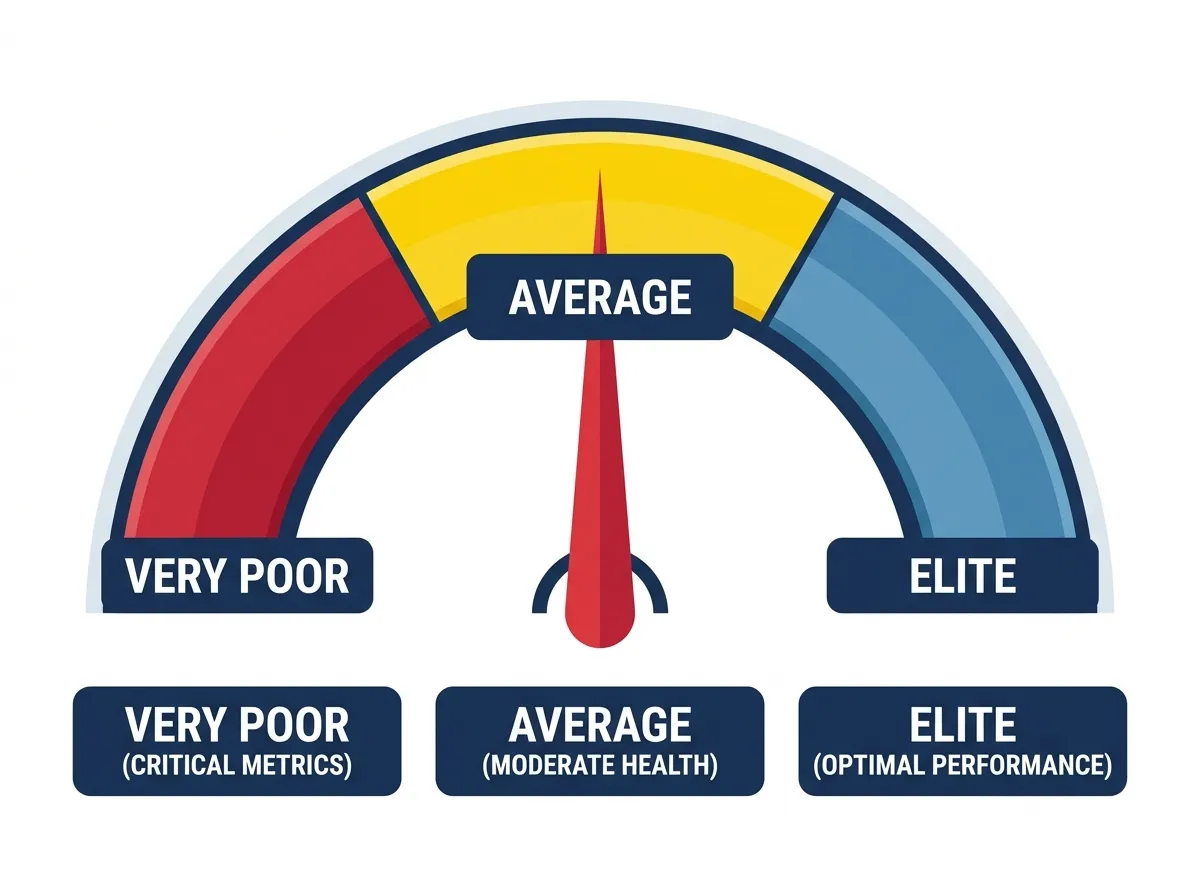
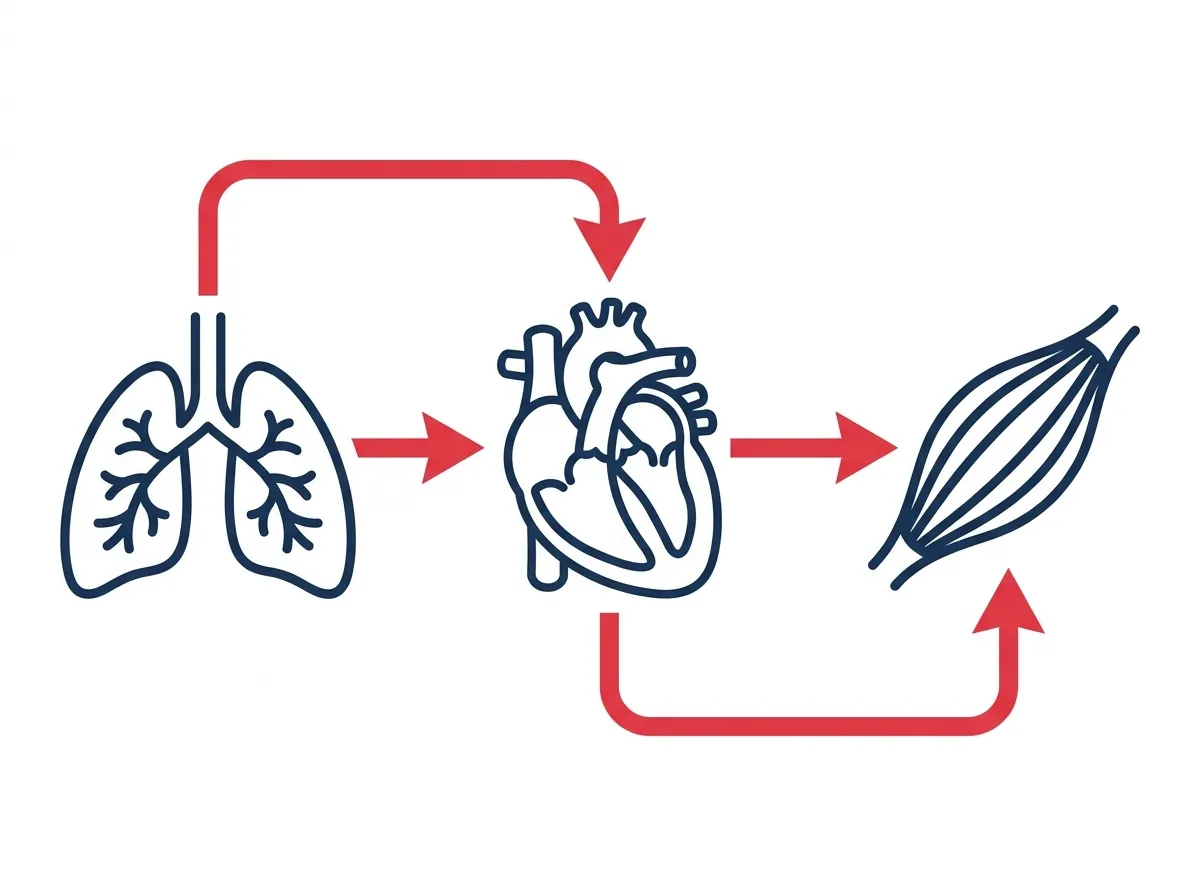
VO2 max — short for maximal oxygen uptake — is the maximum rate at which your body can consume oxygen during intense exercise. It is expressed in millilitres of oxygen per kilogram of body weight per minute (ml/kg/min) and is widely regarded as the gold standard measure of cardiovascular fitness and aerobic endurance capacity. Because your VO2 max is so closely tied to your heart health, it is a key metric to understand alongside your overall Heart Score Calculator results.
The reason VO2 max matters extends well beyond athletic performance. A large body of research, including a landmark study published in the Journal of the American College of Cardiology (Kokkinos et al., 2022), found that cardiorespiratory fitness — directly reflected by VO2 max — is one of the strongest independent predictors of mortality risk across age, race, and sex. The higher your VO2 max, the more oxygen your heart, lungs, and muscles can process — and the lower your risk of cardiovascular disease, metabolic syndrome, and all-cause mortality.
VO2 max is not just for athletes. A 2018 study by the American Heart Association formally recognised low cardiorespiratory fitness as a major risk factor for cardiovascular mortality — placing it alongside smoking, hypertension, and diabetes in clinical significance. Knowing and improving your VO2 max is one of the most actionable things you can do for long-term health.
VO2 Max Chart: Norms by Age and Gender (ACSM)

The following VO2 max reference values are based on American College of Sports Medicine (ACSM) normative data. Use this table to understand where your calculated VO2 max sits relative to your age group. Remember that VO2 max naturally declines with age — which is why age-specific norms are essential for accurate interpretation.
Men — VO2 Max (ml/kg/min)
| Age | Very Poor | Poor | Average | Good | Excellent | Superior |
|---|---|---|---|---|---|---|
| 13–19 | <35 | 35–38 | 39–43 | 44–48 | 49–53 | >53 |
| 20–29 | <33 | 33–36 | 37–41 | 42–45 | 46–52 | >52 |
| 30–39 | <31 | 31–34 | 35–40 | 41–44 | 45–49 | >49 |
| 40–49 | <30 | 30–33 | 34–37 | 38–41 | 42–45 | >45 |
| 50–59 | <26 | 26–30 | 31–35 | 36–40 | 41–45 | >45 |
| 60–69 | <20 | 20–25 | 26–31 | 32–36 | 37–40 | >40 |
Women — VO2 Max (ml/kg/min)
| Age | Very Poor | Poor | Average | Good | Excellent | Superior |
|---|---|---|---|---|---|---|
| 13–19 | <25 | 25–30 | 31–34 | 35–38 | 39–41 | >41 |
| 20–29 | <24 | 24–30 | 31–37 | 38–48 | 49–53 | >53 |
| 30–39 | <20 | 20–27 | 28–33 | 34–38 | 39–45 | >45 |
| 40–49 | <17 | 17–23 | 24–29 | 30–35 | 36–41 | >41 |
| 50–59 | <15 | 15–20 | 21–27 | 28–32 | 33–37 | >37 |
| 60–69 | <13 | 13–17 | 18–23 | 24–30 | 31–35 | >35 |
How Is VO2 Max Calculated? The Formulas Explained
Learning how to calculate VO2 max depends on the method you choose. Every approach uses a different proxy for oxygen consumption — running speed, heart rate response, cycling power, or rowing pace — and applies a validated regression equation to estimate your aerobic capacity. Here is a breakdown of the main methods our calculator uses.
Cooper 12-Minute Run Formula
The simplest and most widely validated field test for calculating VO2 max running performance. Developed by Dr. Kenneth Cooper in 1968, the formula uses the total distance you can cover in 12 minutes to predict maximal aerobic capacity. It has a correlation of approximately r = 0.90 with laboratory measurements, making it one of the most accurate field tests available.
How to Calculate VO2 Max from Heart Rate
The heart rate ratio method (Uth et al., 2004) offers the easiest way to calculate VO2 max at home with no running required. It exploits the simple but powerful relationship between resting heart rate (a marker of cardiac efficiency) and maximum heart rate (a marker of cardiac capacity). People with very fit hearts — high HRmax, low HRrest — will always score higher.
Beep Test VO2 Max Calculation
To calculate VO2 max from the beep test, the Léger formula (1988) uses the running speed at your final completed stage to estimate maximal aerobic capacity. The 20m multistage fitness test (MSFT) is ideal for group PE testing and team sports fitness assessment because the pacing is externally controlled by the audio track, removing the self-pacing problem of the Cooper test.
How to Calculate VO2 Max Cycling
The Astrand-Rhyming submaximal cycling test allows you to calculate VO2 max cycling without a maximal effort — making it safer and more practical for a broad population. You cycle at a fixed wattage until your heart rate stabilises (typically 5–6 minutes), then apply an age correction factor from the Astrand nomogram to estimate VO2 max in millilitres per kilogram per minute.
How Does Garmin Calculate VO2 Max?
Garmin calculates VO2 max using the Firstbeat Analytics algorithm — a Finnish sports science company whose technology powers virtually all Garmin fitness watches. Understanding how Garmin VO2 max calculation works helps you get the most accurate readings from your device.
The Firstbeat algorithm works by comparing your internal workload (heart rate) against your external workload (GPS-measured pace or power output) across 20–30 second data segments during a run or ride. The key formula for running on flat ground uses: theoretical VO2 = 3.5 × speed (m/s). For hilly terrain, an inclination factor is added. For cycling, the system requires a power meter and uses power-to-VO2 conversions scaled to body weight.
| Feature | Garmin (Firstbeat) | Apple Watch | Polar |
|---|---|---|---|
| Algorithm source | Firstbeat Analytics | Apple proprietary | Polar proprietary |
| Running requirement | Outdoor GPS, 10+ min, >70% HRmax | Outdoor walk/run/hike | Outdoor GPS run |
| Cycling VO2 max | Requires power meter | Not available | Requires power meter |
| Reported accuracy | ±3.5 ml/kg/min (Firstbeat) | Not disclosed | ±3.5 ml/kg/min |
| Treadmill support | Requires foot pod | Limited | Limited |
| Updates automatically | After qualifying runs | After walks/runs/hikes | After outdoor runs |
How Does Apple Watch Calculate VO2 Max?
Apple Watch estimates VO2 max — labelled as Cardio Fitness in the Health app — using heart rate data collected during outdoor walks, runs, or hikes. Unlike Garmin's Firstbeat algorithm, Apple does not publicly disclose its full formula. However, it is known that Apple applies the relationship between exercise intensity (estimated via pace) and heart rate response to infer aerobic fitness. The feature is available on Apple Watch Series 3 and later, requires iPhone, and is limited to users aged 20 and older.
One key distinction: how does Apple calculate VO2 max compared to Garmin? Apple's estimate can update passively during brisk outdoor walks — you do not need a dedicated workout — while Garmin requires a sustained, higher-intensity GPS run. This makes Apple's Cardio Fitness estimate more accessible but potentially less precise for trained athletes, since low-intensity walking does not stress the cardiovascular system enough to reveal true aerobic ceiling.
Garmin VO2 max accuracy: Independent studies show Garmin's estimates are accurate to within approximately 5–6% of lab-measured VO2 max for runners (Düking et al., 2022). Garmin calculates separate VO2 max scores for running and cycling — your cycling VO2 max is typically 3–8 points lower because fewer muscle groups are engaged. A Fenix 3, Fenix 6, or any current Garmin model calculates VO2 max the same way using Firstbeat analytics — the difference is sensor hardware quality, not the algorithm.
How to Improve Your VO2 Max: Evidence-Based Methods
VO2 max is trainable — particularly in untrained individuals, who can see improvements of up to 20% within 12 weeks of structured aerobic training (Bacon et al., 2013). Even already-trained athletes can expect 3–8% improvements from targeted high-intensity protocols. Here are the most effective approaches.
The most studied VO2 max protocol. Four 4-minute intervals at 90–95% maximum heart rate, with 3 minutes of active recovery between each. Perform twice per week. Research from the Norwegian University of Science and Technology (Helgerud et al.) shows consistent 10–15% VO2 max gains in 8 weeks in both athletes and non-athletes.
Long, easy aerobic sessions at 60–70% maximum heart rate — the kind where you can hold a full conversation. While less dramatic than HIIT, Zone 2 training builds mitochondrial density, improves fat oxidation, and creates the aerobic foundation that allows you to absorb high-intensity training without burning out.
Running at your lactate threshold pace — typically 85–90% max HR for 20–40 minutes — trains your body to sustain a fast pace without accumulating fatigue. One tempo run per week is one of the most reliable ways to raise your VO2 max running performance over a 12-week training cycle.
VO2 max adaptations happen during recovery, not during training. Athletes sleeping under 7 hours consistently show blunted cardiovascular adaptations compared to those getting 8–9 hours. Overtraining — doing too much without adequate rest — actively suppresses VO2 max and can take weeks to recover from.