What Is BMR (Basal Metabolic Rate)?
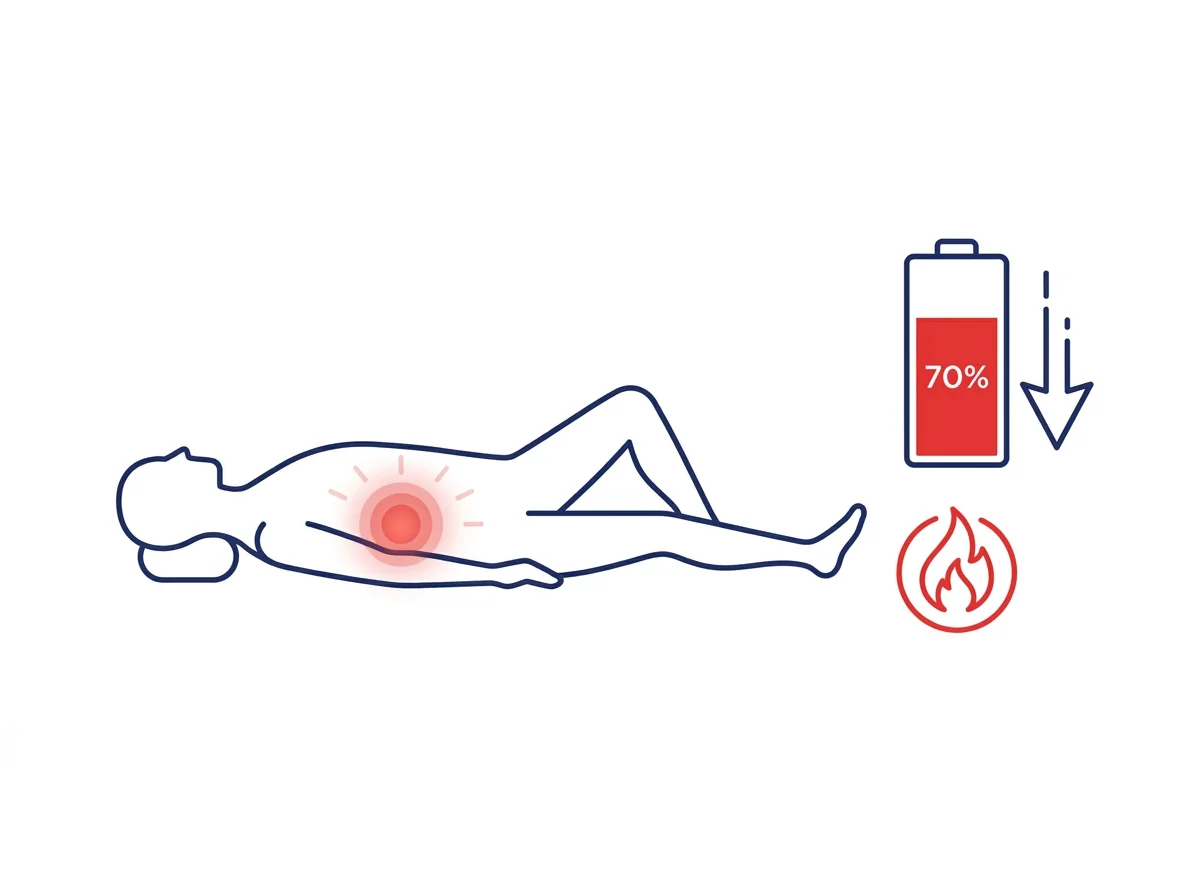
Basal metabolic rate is the number of calories your body needs each day to keep itself running while doing absolutely nothing — no walking, no digesting food, no exercise. It covers the energy cost of breathing, pumping blood, regulating body temperature, repairing cells, and keeping your brain and organs functioning. Even if you spent an entire day lying motionless in bed, your body would still burn this many calories just to stay alive.
For most adults, BMR accounts for 60–75% of total daily calories burned — it is the single largest component of your overall energy expenditure, larger than exercise and digestion combined. This is exactly why understanding your BMR matters: it is the floor beneath every calorie calculation that follows, whether you're trying to lose fat, build muscle, or simply maintain your current weight. Pairing your BMR result with our TDEE Calculator gives you the complete daily calorie picture once activity is factored in.
How to Calculate BMR — The Three Formulas Explained
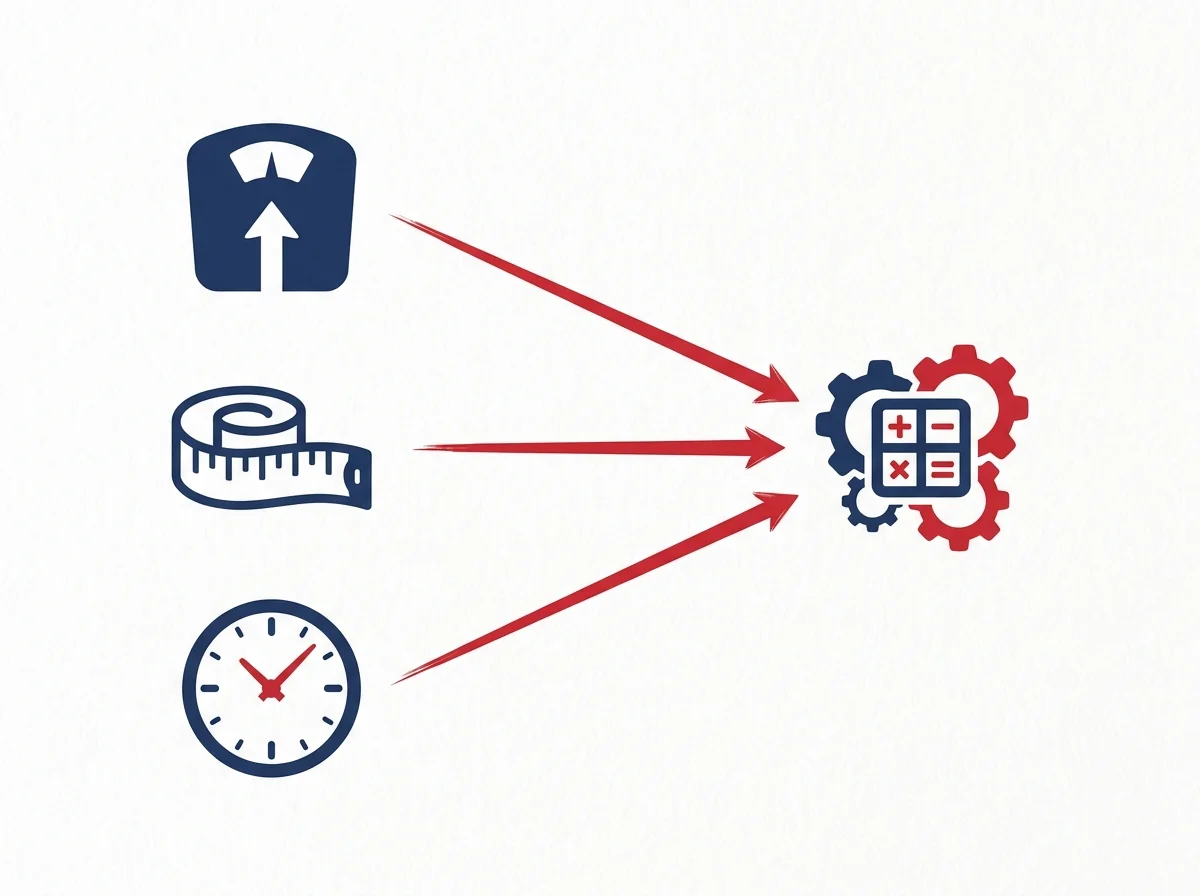
There is no single "correct" BMR formula — each one was built from a different research population and weighs the input variables slightly differently. The Heart Score Calculator runs all three so you can compare results instead of relying on just one number.
Mifflin-St Jeor Equation (1990) — Recommended Default
Published by Mifflin, St Jeor, and colleagues in the American Journal of Clinical Nutrition in 1990, this formula is now widely regarded as the most accurate option for the general adult population. Comparative studies have found it predicts measured resting energy expenditure within 10% more reliably than older equations.
Harris-Benedict Equation (Revised 1984)
Originally developed in 1919 and considered the gold standard for over 70 years, the Harris-Benedict equation was revised by Roza and Shizgal in 1984 for improved accuracy. It is still widely used today and remains a useful comparison point, though research generally shows it overestimates BMR by 5–15% compared to Mifflin-St Jeor, particularly for people with lower activity levels.
Katch-McArdle Formula (Lean Mass Based)
Unlike the other two formulas, Katch-McArdle does not use total body weight directly — it calculates BMR from your lean body mass (everything that isn't fat), making it the most accurate choice for people who already know their body fat percentage with reasonable precision. This matters because muscle tissue is metabolically active and burns considerably more calories at rest than fat tissue does.
BMR vs TDEE — What's the Real Difference?

BMR and TDEE are often confused, but the relationship between them is simple once you see it laid out. BMR is the calorie cost of just existing — no movement, no digestion, no exercise. TDEE (Total Daily Energy Expenditure) takes that BMR number and adds everything else your body burns across a real day: walking around, exercising, fidgeting, and even digesting your meals.
| Activity Level | Description | Multiplier |
|---|---|---|
| Sedentary | Little or no exercise, desk job | BMR × 1.2 |
| Lightly Active | Light exercise 1-3 days/week | BMR × 1.375 |
| Moderately Active | Moderate exercise 3-5 days/week | BMR × 1.55 |
| Very Active | Hard exercise 6-7 days/week | BMR × 1.725 |
| Extra Active | Athlete or physically demanding job | BMR × 1.9 |
Once you know your TDEE, calorie planning becomes simple subtraction and addition: eat below TDEE to lose weight, at TDEE to maintain, above TDEE to gain. Our BMR calculator above generates all five TDEE levels automatically the moment you calculate, so you never need to do this multiplication by hand. If you also want a full breakdown of macros alongside your calorie target, our dedicated TDEE Calculator goes a step further with protein, carb, and fat targets.
Using Your BMR Result the Right Way
Your BMR is the minimum your body needs to function normally. Eating consistently below this number — even while trying to lose weight fast — can trigger metabolic slowdown, muscle loss, and hormonal disruption. Aim your calorie target at or above BMR, with the actual deficit coming from the gap between TDEE and your intake.
BMR is directly tied to your current body weight. Once you've lost or gained more than 5-10 pounds, recalculate to keep your calorie targets accurate. This is one of the most overlooked reasons weight loss plateaus — people keep eating based on a BMR that no longer matches their current body.
Because muscle tissue burns more calories at rest than fat tissue, resistance training is one of the few sustainable ways to meaningfully raise your BMR over time. This is also why the Katch-McArdle formula — which uses lean mass instead of total weight — tends to give athletic, muscular individuals a higher, more accurate BMR estimate.
Since Mifflin-St Jeor, Harris-Benedict, and Katch-McArdle can differ by 100-150 calories, treat the spread between formulas as your realistic range rather than fixating on one exact figure. Start with the middle of that range, track your weight over 3-4 weeks, then adjust your calorie target based on what actually happens.
Important: BMR formulas are statistical estimates built from population averages — they cannot account for your individual genetics, thyroid function, or unique metabolism. If your real-world weight trend consistently diverges from what your calculated calorie target predicts, trust the data from your own body over the formula, and adjust your intake by 100-200 calories accordingly.