Calcium Score Test: What It Is, How It Works, and What Your Score Means
A calcium score test is a low-dose CT scan that measures calcified plaque in the coronary arteries. The result, called a coronary artery calcium (CAC) score, helps clinicians refine cardiovascular risk estimates when standard risk calculators leave the picture uncertain.

A calcium score test uses a non-contrast CT scan to detect and quantify calcified plaque in the coronary arteries.
Key Takeaways
- A calcium score test (CT coronary calcium scan) measures calcified plaque in the coronary arteries and reports it as a CAC score in Agatston units.
- A CAC score of zero means no calcified plaque was detected; scores of 1–10 are minimal, 11–100 mild, 101–400 moderate, and above 400 extensive.
- The test uses no contrast dye, takes about 10 to 15 minutes, and delivers roughly 1 mSv of radiation on modern scanners.
- Guidelines describe CAC testing mainly for intermediate-risk adults when the treatment decision remains uncertain after standard risk assessment.
- CAC testing complements risk calculators: it adds a direct physical measurement to a probability estimate, and it does not show soft, non-calcified plaque.
A calcium score test, also called a CT calcium score test or cardiac calcium score test, is a specialized computed tomography (CT) scan of the heart. It detects calcium deposits in the walls of the coronary arteries, the vessels that supply blood to the heart muscle. The scan produces a single number, the coronary artery calcium (CAC) score, that reflects how much calcified plaque is present.
Calcium in an artery wall is a marker of atherosclerosis, the slow buildup of plaque inside arteries. As plaque ages, parts of it harden into calcium deposits that show up clearly on CT images. The scan does not measure cholesterol, blood pressure, or blood sugar. It measures the physical result of years of plaque accumulation in one specific place: the coronary arteries.
What Is a Calcium Score Test?
A calcium score test is a non-contrast CT scan that quantifies calcified plaque in the coronary arteries and reports the total as a CAC score in Agatston units. The Agatston method, described by Agatston and colleagues in 1990, counts calcium lesions denser than 130 Hounsfield units with an area of at least 1 mm², weights each lesion by density, and adds the totals across all four main coronary arteries.1
Three terms describe the same test. "Calcium score test" is the everyday name. "Coronary artery calcium score" and its abbreviation "CAC score" are the clinical names. "Cardiac calcium score" and "CAC test" appear in patient-facing material and refer to the identical scan. Reports may also list a percentile, which compares the score with people of the same age, sex, and ethnicity from population data such as the Multi-Ethnic Study of Atherosclerosis (MESA).3
The absolute score and the percentile answer different questions. The absolute score states how much calcium is present. The percentile states how that amount compares with peers. A score of 50 carries different context at age 45 than at age 75, because calcium accumulates with age. Clinicians read both numbers together, alongside the person's overall risk profile.
The test differs from other cardiac imaging in one central way: it looks at the artery wall, not the artery opening. A coronary angiogram shows whether blood flow is narrowed. A calcium scan shows how much hardened plaque sits in the wall, even when the opening remains wide. That distinction shapes both the value and the limits of the test.
How Is a Calcium Score Test Done?
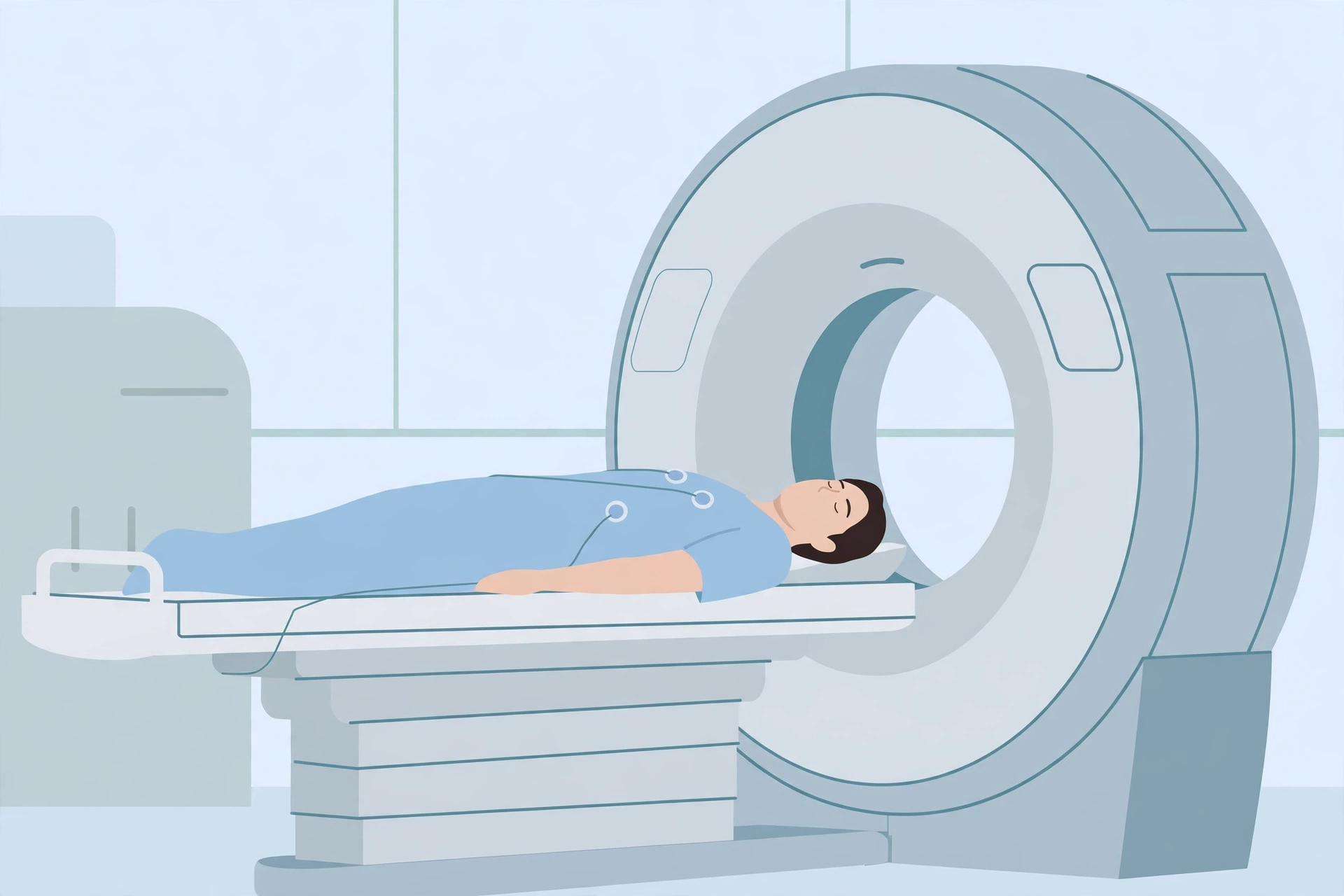
A calcium score test is done with a non-contrast CT scanner: the person lies on a table, ECG leads are placed on the chest to time image capture with the heartbeat, and the table moves briefly through the scanner while images are taken. The scan itself takes only a few seconds, and the full appointment usually lasts 10 to 15 minutes.
Preparation is minimal. Fasting is usually not required, and no contrast dye, intravenous line, or needles are involved. Patients typically change into a gown and remove metal objects from the chest area, since metal creates artifacts on CT images. The technologist asks the person to lie still and hold their breath for a few seconds during each image capture, because breathing motion blurs the pictures.
During the scan, the CT scanner rotates around the chest and takes thin cross-sectional images of the heart. ECG gating synchronizes each image with a quiet phase of the heartbeat, which keeps the moving coronary arteries sharp. Software then identifies calcium deposits, measures their area and density, and computes the Agatston score. Results are commonly available the same day or within a few days, depending on the imaging center.
Radiation exposure is low. In the MESA cohort, the mean effective dose for calcium scoring on modern scanners was 1.05 mSv, with a median of 0.95 mSv.7 For comparison, average natural background radiation is about 3 mSv per year. Dose varies with scanner type and body size, and imaging centers follow dose-reduction protocols to keep exposure as low as reasonably achievable.
CAC Score Chart: Results by Category
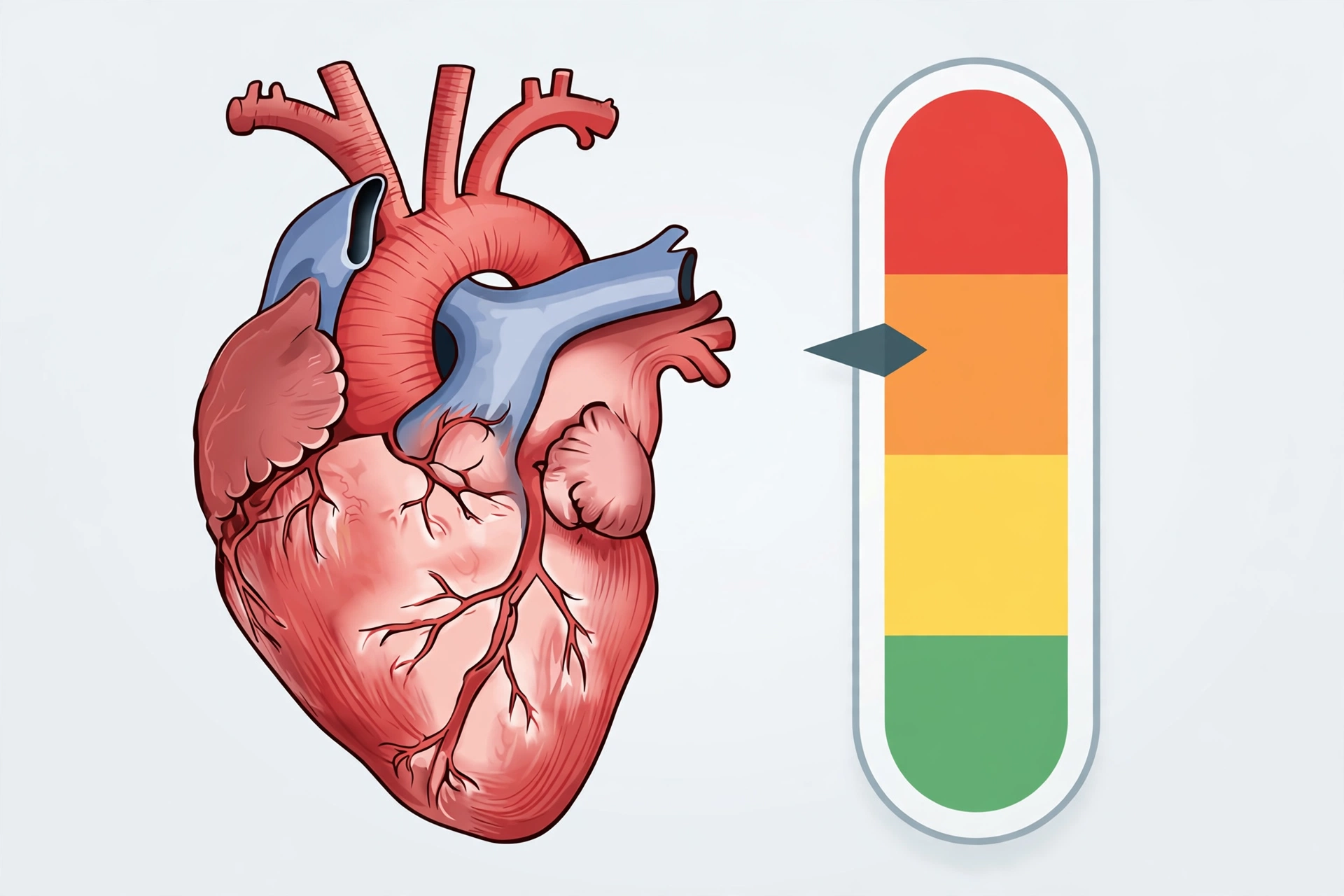
CAC score results are grouped into five standard categories based on the Agatston score. The categories describe the amount of calcified plaque detected and the pattern of risk observed in population studies. The table below summarizes the standard CAC score chart.
| CAC Score (Agatston Units) | Category | What It Reflects |
|---|---|---|
| 0 | None | No calcified plaque detected; very low event rates observed in population studies over the following years |
| 1–10 | Minimal | Minimal calcified plaque present; low risk, but higher than a score of zero |
| 11–100 | Mild | Mild calcified plaque burden; mildly increased risk compared with zero |
| 101–400 | Moderate | Moderate calcified plaque burden; moderately increased risk of future cardiovascular events |
| Above 400 | Extensive | Extensive calcified plaque burden; substantially higher average risk in cohort studies |
The categories are population patterns, not personal guarantees. Event rates rise steadily across the categories, and the gradient is steep: in the MESA cohort of 6,722 adults without known cardiovascular disease, the adjusted risk of a coronary event was 7.73 times higher for scores of 101–300 and 9.67 times higher for scores above 300, compared with a score of zero.2 Each doubling of the score raised the risk of a major coronary event by roughly 15 to 35 percent across the four ethnic groups studied.2
Age and sex percentiles add context to the absolute number. Population data show that calcium appears earlier and in larger amounts in men than in women, and that prevalence rises sharply with age.3 A moderate absolute score in a younger adult sits at a higher percentile than the same score in an older adult, which is why reports include both figures. The absolute score drives most guideline thresholds, while the percentile helps clinicians judge whether the burden is unusual for the person's age.
What Is a Good CAC Score?
A CAC score of zero is generally viewed as the most favorable result, since it means no calcified plaque was detected in the coronary arteries. Population studies link a zero score with very low rates of coronary events over the following years, a pattern clinicians sometimes call the "power of zero." Scores of 1 to 10 reflect minimal plaque and sit close to zero in observed risk, while risk climbs steadily through the mild, moderate, and extensive categories.
A "good" score is always relative to the person's age and overall risk picture. A score of 80 in a 78-year-old reflects a different situation than the same score in a 48-year-old, because the younger person's percentile is higher. Sex matters as well: at the same age, men typically carry higher scores than women. The percentile on the report exists to make that comparison explicit.
Two cautions apply to zero scores. First, zero means no calcified plaque, not no plaque at all: soft, non-calcified plaque does not appear on a calcium scan. Second, zero does not erase risk factors. Smoking, diabetes, high cholesterol, and high blood pressure continue to influence risk even when no calcium is visible. A zero score refines an estimate; it does not reset it to nothing.
Scores above zero are common and become more common with age. In MESA, a large share of middle-aged and older adults without symptoms had detectable calcium.3 A positive score is a prompt for a careful risk discussion, not a verdict on its own. The number enters the discussion alongside cholesterol, blood pressure, smoking history, diabetes status, and family history.
Who Should Consider a Calcium Score Test?
Guidelines describe CAC testing mainly for adults at intermediate cardiovascular risk, or selected adults at borderline risk, when the treatment decision remains uncertain after standard risk assessment. The 2018 AHA/ACC cholesterol guideline frames the test as a tie-breaker: when a clinician and patient remain unsure about preventive therapy after estimating 10-year risk and reviewing risk-enhancing factors, a CAC score adds measured evidence to the discussion.4
The core group is adults aged 40 to 75 without known cardiovascular disease whose 10-year ASCVD risk estimate falls in the intermediate band (7.5% to under 20%), or in the borderline band (5% to under 7.5%) with additional risk-enhancing factors. The 2019 ACC/AHA primary prevention guideline describes CAC measurement as a reasonable option in the same setting, when the decision stays uncertain after the standard assessment.5
Several profiles fit the guideline framing well. Adults who are reluctant about preventive therapy and want a concrete measurement before deciding often find the test clarifying. Older adults with few risk factors who question whether therapy would help them also fit the pattern, as do middle-aged adults at borderline risk with factors that raise concern. In each case, the test addresses a specific uncertainty rather than serving as routine screening for everyone.
The guideline thresholds attached to the result are specific. When the score is zero, the 2018 guideline describes withholding preventive statin therapy as reasonable, with reassessment in 5 to 10 years, as long as higher-risk conditions such as diabetes, current smoking, or a family history of premature coronary disease are absent.4 When the score is 1 to 99, statin therapy is described as reasonable for patients aged 55 years and older. When the score is 100 or higher, or at or above the 75th percentile, statin therapy is described as reasonable regardless of age.4 These are guideline descriptions of reasonable options in a shared clinical discussion, not instructions for any individual reader.
Who Is the Test Less Useful For?
CAC testing adds the least when the clinical picture is already clear. Adults with known cardiovascular disease already carry an established diagnosis that guides preventive care, so a calcium score rarely changes the plan. The test was developed for primary prevention, meaning risk assessment in people without known disease, and its guideline role sits in that setting.4
Very low-risk younger adults also gain little. Calcium accumulates over decades, so scores in adults in their twenties and thirties are usually zero even when risk factors are present. A zero result in that age group carries less reassurance than the same result at age 60, because the test is measuring a process that has had little time to leave a calcified trace. Risk factor assessment remains the main tool at younger ages.
At the other end, adults already at very high estimated risk gain little from confirmation. When the risk estimate and risk factors already point clearly toward intensive preventive therapy, a calcium score adds measurement without changing direction. The same logic applies when the result cannot change the plan for other reasons, such as when a person cannot undergo follow-up evaluation.
The test is also the wrong tool for acute symptoms. Chest pain, breathlessness, or other symptoms suggesting an acute cardiac event require emergency evaluation, not a scheduled calcium scan. CAC testing is a planned risk-refinement test for people without symptoms, performed in an outpatient imaging center. Anyone with active or severe symptoms needs immediate emergency care, as the disclaimer at the top of this page states.
Limitations and Confounders
The central limitation of CAC testing is what it cannot see. A calcium scan detects calcified plaque only. Soft, non-calcified plaque, which is common in younger adults and in earlier stages of atherosclerosis, does not appear on the scan. A score of zero therefore rules out calcified plaque, not plaque in general, and a low score does not exclude the presence of softer plaque.
The score also does not measure narrowing. A high calcium burden correlates with overall plaque burden, but the scan does not show whether any single artery is narrowed or by how much. Two people with the same score can have very different distributions of plaque across their coronary arteries. When information about narrowing or blood flow is needed, clinicians turn to different tests, such as coronary CT angiography or stress testing.
Statin therapy complicates repeat scores. Serial imaging studies found that calcium indices rose during statin therapy even when total plaque volume shrank, a pattern researchers link to plaque stabilization as soft plaque becomes denser and more calcified.6 A rising score during treatment is therefore not read on its own as worsening disease. This effect is one reason guidelines describe repeat testing at intervals of 5 to 10 years rather than annually.4
Other confounders deserve mention. Scores rise with age, so an older adult's higher score partly reflects longer exposure time rather than faster disease. Motion artifacts from breathing or a rapid heart rate can blur images and affect accuracy. The scan uses ionizing radiation, roughly 1 mSv on modern scanners, which is low but not zero.7 Incidental findings, such as lung nodules visible on the chest images, sometimes lead to additional testing. Finally, a single score is a snapshot: it records plaque accumulated up to the scan date and says nothing direct about how fast plaque will accumulate next.
CAC Score vs Risk Calculators
Risk calculators and CAC testing answer different questions, which is why clinicians use them together. An ASCVD risk calculator estimates the probability of a cardiovascular event from risk factors: age, sex, cholesterol, blood pressure, smoking, and diabetes status. The output is a percentage chance over 10 years. A CAC score measures calcified plaque already present in the arteries. One is a statistical estimate; the other is a physical measurement.
The AHA PREVENT calculator extends the same idea with more inputs, including kidney function measured as estimated glomerular filtration rate (eGFR), body mass index, and optional albuminuria and blood sugar measures, and it reports 10-year and 30-year risk. PREVENT and the ASCVD equations both remain probability models: they estimate what happens on average to people with a given risk profile. They cannot see inside any individual's arteries.
CAC testing fills that gap in one direction. When a probability estimate sits near a decision threshold, a measured score can move the picture up or down. A zero score in an intermediate-risk adult lowers the estimated risk picture, while a score above 100 raises it. In MESA, adding CAC to standard risk factors improved the ability to distinguish who would and would not experience coronary events.2 That reclassification value is the test's main clinical contribution.
The two approaches also disagree sometimes, and the disagreement itself is informative. A person with several risk factors but a zero score has a lower observed event rate than the risk factors alone suggest. A person with few risk factors but a high score carries more plaque than the risk factors predict. Clinicians weigh both pieces of evidence together rather than letting either one override the other. Readers who want the full comparison of the two leading risk models can read the site's ASCVD vs PREVENT calculator comparison, and the heart age explainer shows how risk estimates translate into an intuitive age figure. More explainers live on the Heart Score Calculator blog.
Worked Example: Reading a CAC Result
Consider a 58-year-old man with no known cardiovascular disease who has his risk assessed during a routine visit. He does not smoke and does not have diabetes. His total cholesterol is 212 mg/dL, his HDL cholesterol is 44 mg/dL, and his systolic blood pressure is 134 mmHg on blood pressure treatment. His calculated 10-year ASCVD risk estimate falls in the intermediate band, between 7.5% and under 20%, and the question of preventive therapy remains open after the standard assessment.
A calcium score test is performed to refine the picture. The scan reports a CAC score of 145 Agatston units, placing him in the moderate category (101–400). The report also gives an age- and sex-based percentile for context. Under the 2018 guideline framing, a score of 100 or higher in an intermediate-risk adult is the range where statin therapy is described as reasonable, so the result moves the discussion toward therapy rather than away from it.4
The same man with a different result illustrates the other direction. If the scan had returned a score of zero, the guideline framing would describe withholding statin therapy as reasonable, with reassessment in 5 to 10 years, provided higher-risk conditions such as diabetes, current smoking, or a family history of premature coronary disease were absent.4 The risk factors themselves would remain unchanged in both scenarios; only the measured plaque evidence would differ.
The example shows the test's role clearly. The risk calculator placed the man in a band where the decision was uncertain. The scan added a physical measurement that resolved the uncertainty in one direction or the other. Neither number alone made the decision: the risk estimate set the context, the score refined it, and the clinical discussion weighed both alongside the man's preferences and full history.
🧮 Check Your Heart Risk
Estimate your 10-year cardiovascular risk with the ASCVD calculator, or try the newer PREVENT equations with 10-year and 30-year estimates.
Try the ASCVD Calculator →Frequently Asked Questions
What is a CAC score?
How is a calcium score test done?
What is a good CAC score?
Who should get a calcium score test?
Does a CAC score of zero mean there is no heart disease risk?
Can a calcium score go down after treatment?
How is a CAC score different from an ASCVD risk score?
Sources
- Agatston AS, Janowitz WR, Hildner FJ, et al. Quantification of coronary artery calcium using ultrafast computed tomography. J Am Coll Cardiol. 1990;15(4):827-832. DOI: 10.1016/0735-1097(90)90282-T
- Detrano R, Guerci AD, Carr JJ, et al. Coronary calcium as a predictor of coronary events in four racial or ethnic groups. N Engl J Med. 2008;358(13):1336-1345. DOI: 10.1056/NEJMoa072100
- McClelland RL, Chung H, Detrano R, et al. Distribution of coronary artery calcium by race, gender, and age: results from the Multi-Ethnic Study of Atherosclerosis (MESA). Circulation. 2006;113(1):30-37. DOI: 10.1161/CIRCULATIONAHA.105.580696
- Grundy SM, Stone NJ, Bailey AL, et al. 2018 AHA/ACC/AACVPR/AAPA/ABC/ACPM/ADA/AGS/APhA/ASPC/NLA/PCNA Guideline on the Management of Blood Cholesterol. Circulation. 2019;139(25):e1082-e1143. DOI: 10.1161/CIR.0000000000000625
- Arnett DK, Blumenthal RS, Albert MA, et al. 2019 ACC/AHA Guideline on the Primary Prevention of Cardiovascular Disease. Circulation. 2019;140(11):e596-e646. DOI: 10.1161/CIR.0000000000000678
- Puri R, Nicholls SJ, Shao M, et al. Impact of statins on serial coronary calcification during atheroma progression and regression. J Am Coll Cardiol. 2015;65(13):1273-1282. DOI: 10.1016/j.jacc.2015.01.036
- Coronary calcium scans and radiation exposure in the Multi-Ethnic Study of Atherosclerosis. Int J Cardiovasc Imaging. 2016. PMID: 26515964.
Editorial review: This article was reviewed by the Heart Score Calculator Editorial Team on October 27, 2026. The professional name "Dr. Heart" identifies this editorial work and does not replace advice, diagnosis or treatment from a licensed healthcare professional.