How Is the HAS-BLED Score Calculated?
The HAS-BLED score is an evidence-based clinical risk index designed to estimate the 1-year probability of major bleeding in patients diagnosed with atrial fibrillation (AFib) who are receiving, or being evaluated for, oral anticoagulation therapy. Introduced in 2010 by Pisters and colleagues from the Euro Heart Survey, HAS-BLED awards 1 point for each documented clinical risk factor, generating a cumulative score ranging from 0 to 9 points.
The mnemonic acronym directly reflects nine distinct clinical criteria:
| Letter | Clinical Risk Factor | Specific Defining Criteria | Points | Nature |
|---|---|---|---|---|
| H | Hypertension | Uncontrolled systolic blood pressure > 160 mmHg at clinical evaluation | +1 | Modifiable |
| A | Abnormal Renal Function | Chronic dialysis, renal transplant, or baseline serum Cr ≥ 2.26 mg/dL (≥ 200 µmol/L) | +1 | Non-Modifiable |
| A | Abnormal Liver Function | Chronic liver disease (cirrhosis) or bilirubin > 2x ULN plus AST/ALT > 3x ULN | +1 | Non-Modifiable |
| S | Stroke History | Previous ischemic or hemorrhagic stroke documented in patient history | +1 | Non-Modifiable |
| B | Bleeding History | Prior major hemorrhage, GI bleed, severe anemia, or bleeding diathesis | +1 | Potentially Modifiable |
| L | Labile INR | Unstable INRs, high values, or Time in Therapeutic Range (TTR) < 60% (VKA only) | +1 | Modifiable |
| E | Elderly | Age > 65 years or significant baseline biological frailty | +1 | Non-Modifiable |
| D | Drugs Pre-disposing | Concomitant antiplatelet therapy (aspirin, clopidogrel) or frequent NSAIDs | +1 | Modifiable |
| D | Excessive Alcohol | Excessive alcohol consumption defined as ≥ 8 standard drinks per week | +1 | Modifiable |
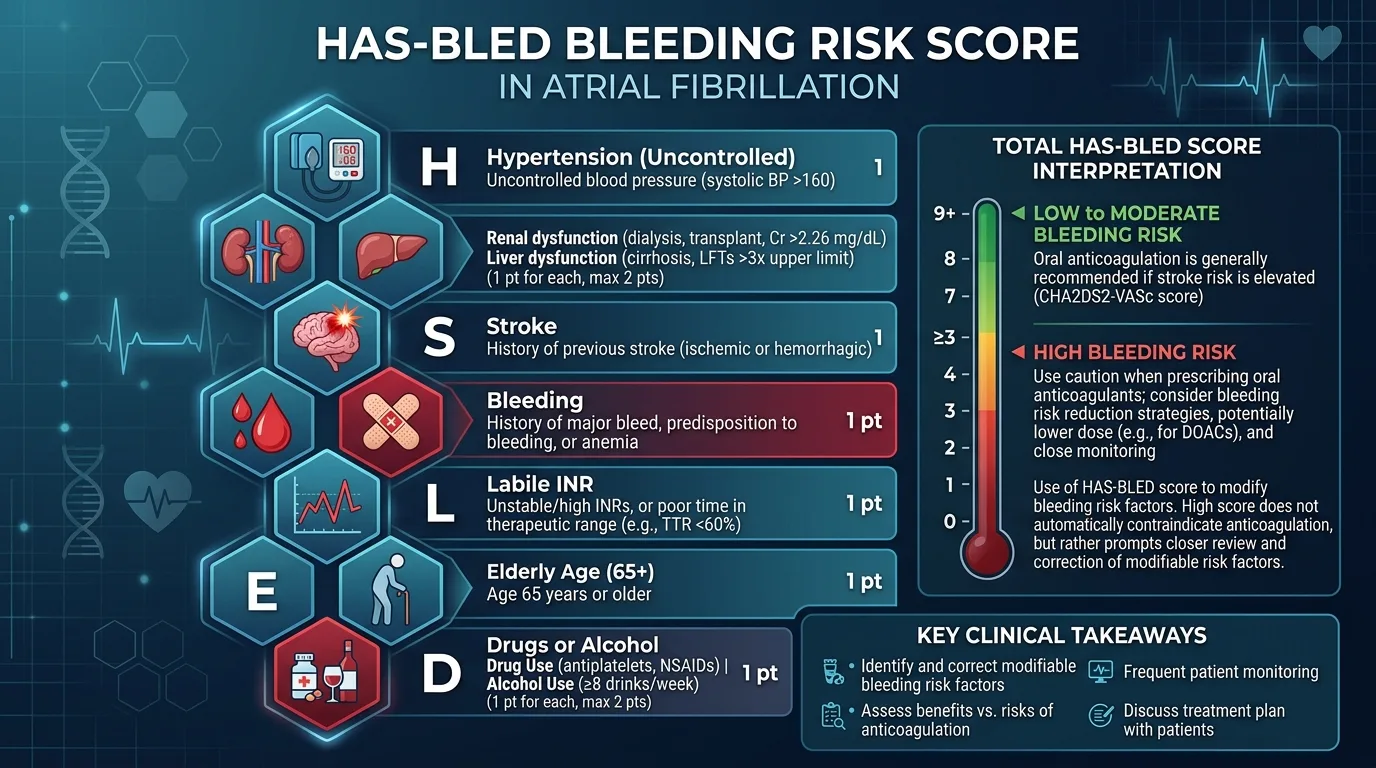
Figure 1: Systematic overview of the HAS-BLED clinical criteria, point weighting, and stratified risk interpretation.
Annual Major Bleeding Rates by HAS-BLED Score
Major bleeding was rigorously defined in the foundational Euro Heart Survey validation cohort as fatal bleeding, symptomatic intracranial hemorrhage, bleeding requiring hospitalization or transfusion of ≥ 2 units of packed red blood cells, or an associated drop in hemoglobin of ≥ 2.0 g/dL. Clinical trials consistently correlate higher scores with escalating hemorrhage rates:
| HAS-BLED Score | Annual Bleeding Rate (% / Year) | Risk Stratification Tier | Clinical Management Recommendation |
|---|---|---|---|
| 0 Points | 1.13% | Low Bleeding Risk | Standard anticoagulation indicated; routine follow-up (every 6 to 12 months). |
| 1 Point | 1.02% | Low Bleeding Risk | Anticoagulation favored; verify blood pressure control and medication reconciliation. |
| 2 Points | 1.88% | Moderate Bleeding Risk | Anticoagulation recommended if stroke risk elevated; address identifiable modifiable factors. |
| 3 Points | 3.74% | High Bleeding Risk | Caution advised; intensive correction of modifiable risks; follow-up every 4 to 8 weeks. |
| 4 Points | 8.70% | High Bleeding Risk | High caution; close multidisciplinary monitoring; prefer DOAC over warfarin; eliminate NSAIDs. |
| 5 Points | 9.10% – 12.5% | High Bleeding Risk | Very high hemorrhage hazard; frequent lab reviews; evaluate left atrial appendage occlusion if refractory. |
| ≥ 6 Points | > 10.0% – 15.0%+ | Very High Bleeding Risk | Specialist multidisciplinary consultation; strict mitigation of all bleeding triggers. |
Modifiable vs. Non-Modifiable Bleeding Risk Factors
The European Society of Cardiology (ESC 2024 Guidelines) and the American College of Cardiology (ACC/AHA/ACCP/HRS 2023 Guidelines) mandate distinguishing between factors that clinicians can actively treat and those that remain fixed:
- Uncontrolled Hypertension: Titrate antihypertensive therapy to maintain systolic blood pressure strictly below 130–140 mmHg.
- Labile INR Control: For patients remaining on Warfarin, optimize adherence or switch to a Direct Oral Anticoagulant (DOAC) which avoids INR volatility.
- Concomitant Medication Deprescribing: Discontinue over-the-counter NSAIDs (ibuprofen, naproxen) and deprescribe unnecessary aspirin in patients established on therapeutic anticoagulation.
- Alcohol Consumption Cessation: Educate patients on reducing alcohol intake to fewer than 8 units/drinks per week to prevent acute mucosal injury and trauma-related bleeds.
- Gastroprotection: Initiate proton-pump inhibitor (PPI) co-prescription in patients with previous peptic ulcer disease or dual antiplatelet/anticoagulant therapy.
Balancing Stroke Prophylaxis: CHA₂DS₂-VASc vs. HAS-BLED
Clinical decision-making in non-valvular atrial fibrillation requires continuous juxtaposition of ischemic stroke risk against hemorrhagic hazard. The clinical algorithm operates as a complementary two-step process:
- Step 1 — Determine Stroke Prophylaxis Need (CHA₂DS₂-VASc Score): Oral anticoagulation is strongly indicated in men with a score ≥ 2 and women with a score ≥ 3. In men with a score of 1 or women with 2, anticoagulation is clinically considered based on net clinical benefit.
- Step 2 — Identify Bleeding Hazards (HAS-BLED Score): Calculate HAS-BLED not to decide whether to anticoagulate, but to establish how safely anticoagulation can be maintained through proactive risk correction and tailored surveillance intervals.
| Clinical Scenario | CHA₂DS₂-VASc | HAS-BLED | Consensus Guideline Strategy |
|---|---|---|---|
| Low Stroke, Low Bleed | 0 (Male) / 1 (Female) | 0 – 1 | No antithrombotic therapy indicated. Annual re-evaluation for new risk factors. |
| High Stroke, Low Bleed | ≥ 2 (Male) / ≥ 3 (Female) | 0 – 1 | Initiate Direct Oral Anticoagulant (DOAC) immediately. Standard 6-month review. |
| High Stroke, High Bleed | ≥ 2 (Male) / ≥ 3 (Female) | ≥ 3 | Anticoagulate (DOAC preferred over Warfarin). Aggressively treat BP, stop NSAIDs, add PPI, schedule follow-up every 4–8 weeks. |
| Low Stroke, High Bleed | 0 (Male) / 1 (Female) | ≥ 3 | Avoid anticoagulation; stroke risk does not outweigh bleeding danger. Correct bleeding hazards. |
Clinical Confounders & Special Considerations
Several real-world scenarios require specialized clinical context when calculating and interpreting HAS-BLED:
1. Direct Oral Anticoagulants (DOACs) vs. Warfarin
HAS-BLED was originally validated during the Warfarin era. In patients receiving DOACs (Apixaban, Rivaroxaban, Dabigatran, Edoxaban), INR monitoring is obsolete. The "L" criterion (Labile INR) is scored as 0 points in DOAC patients unless historical Warfarin therapy demonstrated poor control (TTR < 60%). Pivotal phase III trials (ARISTOTLE, RE-LY, ROCKET-AF, ENGAGE AF-TIMI 48) demonstrated that DOACs halve the incidence of catastrophic intracranial hemorrhage compared to Warfarin across all HAS-BLED tiers.
2. Elderly Patients & Fall Risk
Physicians frequently withhold anticoagulation in elderly patients due to fear of traumatic intracranial hemorrhage from accidental falls. However, Markov decision modeling shows that a patient must fall approximately 295 times in a single year for the risk of subdural hematoma to outweigh the ischemic stroke prevention benefit of oral anticoagulation. Fall risk alone should rarely justify withholding blood thinners.
3. Renal & Hepatic Thresholds
The renal criterion in HAS-BLED requires severe, chronic disease (Cr ≥ 2.26 mg/dL / 200 µmol/L, dialysis, or kidney transplant). Mild-to-moderate chronic kidney disease (eGFR 30–59 mL/min) does not meet the strict 1-point threshold, though it warrants dose-adjustment per specific DOAC drug monographs.
Worked Clinical Case Scenarios
A 73-year-old male with persistent non-valvular atrial fibrillation presents for routine review. Past medical history includes essential hypertension and osteoarthritis. During the clinic encounter, his seated blood pressure is 174/98 mmHg. Current medications include Metoprolol, Amlodipine, Over-the-Counter Naproxen (NSAID) 500 mg twice daily for joint pain, and Baby Aspirin 81 mg daily.
- H
Hypertension: Systolic BP 174 mmHg (> 160 mmHg) = +1 Point
- A
Renal/Liver Function: Serum Cr 1.1 mg/dL, normal LFTs = 0 Points
- S
Stroke History: None = 0 Points
- B
Bleeding History: No prior major hemorrhage = 0 Points
- L
Labile INR: Not taking Warfarin = 0 Points
- E
Elderly: Age 73 years (> 65) = +1 Point
- D
Drugs: Taking regular NSAIDs + Aspirin = +1 Point
- D
Alcohol: Occasional glass of wine (1–2/week) = 0 Points
A 58-year-old female presents following paroxysmal atrial fibrillation detected on an ambulatory Holter monitor. She has a history of type 2 diabetes mellitus and well-controlled hypertension (BP 124/78 mmHg on Lisinopril). She takes no NSAIDs, drinks no alcohol, and has normal renal and hepatic laboratory panels.
Frequently Asked Questions About HAS-BLED
What is the HAS-BLED score used for?
The HAS-BLED score is a validated clinical risk assessment tool used to estimate the 1-year risk of major bleeding in patients with atrial fibrillation (AFib) who are receiving or being considered for oral anticoagulation (DOACs or Warfarin). It alerts clinicians to vulnerable patients requiring closer monitoring and helps identify modifiable bleeding hazards.
Does a high HAS-BLED score mean a patient should not take blood thinners?
No. Major clinical guidelines (ACC/AHA/HRS and ESC) explicitly emphasize that a high HAS-BLED score (≥ 3) is NOT a reason to withhold oral anticoagulation in patients with elevated thromboembolic stroke risk (high CHA₂DS₂-VASc). Instead, a high score mandates addressing modifiable bleeding risk factors and scheduling more frequent clinical monitoring.
What does a HAS-BLED score of 3 or greater indicate?
A HAS-BLED score ≥ 3 denotes high bleeding risk (annual major bleeding rate of 3.7% or higher). In this tier, clinicians should prioritize corrective interventions: strictly controlling blood pressure, deprescribing concurrent NSAIDs or unnecessary aspirin, minimizing alcohol consumption, and scheduling follow-up evaluations every 4 to 8 weeks.
How are CHA2DS2-VASc and HAS-BLED used together?
CHA₂DS₂-VASc determines whether anticoagulation is needed to prevent ischemic stroke, while HAS-BLED evaluates bleeding hazards. Because both scores share risk factors (such as age, hypertension, and prior stroke), patients at highest risk of stroke are frequently also at higher bleeding risk. Clinical evidence demonstrates that high-risk patients generally derive the greatest net absolute survival benefit from anticoagulation.
What are modifiable vs non-modifiable bleeding risk factors in HAS-BLED?
Modifiable risk factors include uncontrolled hypertension (SBP > 160 mmHg), labile INR (if on Warfarin), concurrent antiplatelet/NSAID therapy, and excess alcohol consumption. Non-modifiable risk factors include age > 65 years, prior stroke, chronic renal disease, chronic hepatic disease, and history of major hemorrhage.
How does the Labile INR item apply to patients taking DOACs?
In patients taking Direct Oral Anticoagulants (DOACs: Apixaban, Rivaroxaban, Dabigatran, Edoxaban), the Labile INR criterion does not apply because DOACs provide predictable anticoagulation without INR monitoring. This item receives 0 points for DOAC-naive or established DOAC patients unless historical INR control on Warfarin was known to be labile (TTR < 60%).
What constitutes a major bleed in the HAS-BLED validation studies?
In foundational validation trials (Pisters et al., Euro Heart Survey), major bleeding was defined as any fatal bleed, symptomatic intracranial hemorrhage, bleeding requiring hospitalization or transfusion of ≥ 2 units of packed red blood cells, or bleeding associated with a hemoglobin drop of ≥ 2 g/dL.
Peer-Reviewed References & Clinical Guidelines
- Pisters R, Lane DA, Nieuwlaat R, et al. A novel user-friendly score (HAS-BLED) to assess 1-year risk of major bleeding in patients with atrial fibrillation: the Euro Heart Survey. Chest. 2010;138(5):1093-1100. DOI: 10.1378/chest.10-0134.
- Lip GYH, Frison L, Halperin JL, Lane DA. Comparative validation of a novel risk score for predicting bleeding risk in anticoagulated patients with atrial fibrillation: the HAS-BLED score. J Am Coll Cardiol. 2011;57(2):173-180. DOI: 10.1016/j.jacc.2010.09.024.
- Joglar JA, Chung MK, Armbruster AL, et al. 2023 ACC/AHA/ACCP/HRS Guideline for the Diagnosis and Management of Atrial Fibrillation. Circulation. 2024;149(1):e1-e156. DOI: 10.1161/CIR.0000000000001193.
- Van Gelder IC, Rienstra M, Bunting KV, et al. 2024 ESC Guidelines for the management of atrial fibrillation developed in collaboration with EACTS. Eur Heart J. 2024;45(36):3314-3414. DOI: 10.1093/eurheartj/ehae176.