5 Calculator Modes · All Vial Sizes · Free Forever

Tirzepatide Calculator:
Reconstitution, Dosage
& Weight Loss Planner

The most complete free tirzepatide calculator available — covering everything from reconstitution (BAC water volume + syringe units) and mg-to-units dosage conversion, to weight loss projections based on SURMOUNT trial data, protein intake for muscle preservation, and half-life tracking. Works for all vial sizes from 5mg to 60mg, and covers both compounded tirzepatide and brand-name Mounjaro and Zepbound.

Why This Tirzepatide Calculator Beats Every Competitor

FatScientist and PeptideIQ only calculate units. We give you 5 complete calculators in one place: reconstitution, dosage conversion, weight loss projection by dose, protein intake for lean mass preservation, and half-life tracking — all with a syringe visual, titration timeline, and step-by-step formulas. Free, no sign-up, no ads.

5
Calc Modes
6
Vial Size Presets
20+
FAQs Answered
Free
No Sign-up
⚠️ Medical & Legal Disclaimer

This calculator is for educational and informational purposes only. Tirzepatide (Mounjaro®, Zepbound®) is an FDA-approved prescription medication. Compounded tirzepatide exists under specific regulatory conditions. This tool does not constitute medical advice. Never adjust your prescribed dosage without consulting your licensed healthcare provider. Injection errors can cause serious harm.

Tirzepatide Calculator

SURMOUNT Data

Enter your vial size, BAC water volume, and desired dose. The calculator gives you exact syringe units plus concentration and draw volume.

Total mg in your vial

mL of bacteriostatic water added

Typical: 2.5mg, 5mg, 7.5mg, 10mg, 12.5mg, 15mg

Already know your concentration? Enter your dose in mg and concentration in mg/mL to get exact U-100 syringe units.

Common: 5, 10, 15, 17, 20 mg/mL

Estimates weight loss based on SURMOUNT-1, 2, 3, and 4 clinical trial data. Individual results vary — this is a population-level projection.

Tirzepatide users need higher protein intake than average to preserve lean muscle mass during rapid weight loss. This calculator uses GLP-1-specific protein targets.

Tirzepatide has a half-life of approximately 5 days (120 hours). Steady state is reached after 4–5 half-lives of consistent weekly dosing (~4–5 weeks).

📉 Projected Weight Loss (SURMOUNT Trial Data)
% Body Weight Lost
Kg Lost
Target Weight (kg)
Result
Secondary
Tertiary

Always verify your vial's labeled concentration before injecting. Concentration may differ from your calculation if BAC water was already pre-mixed or if the vial is from a different batch. Confirm every dose with your prescribing provider or pharmacist.

Tirzepatide Dosing Chart — Complete Titration Schedule (2024/2025)
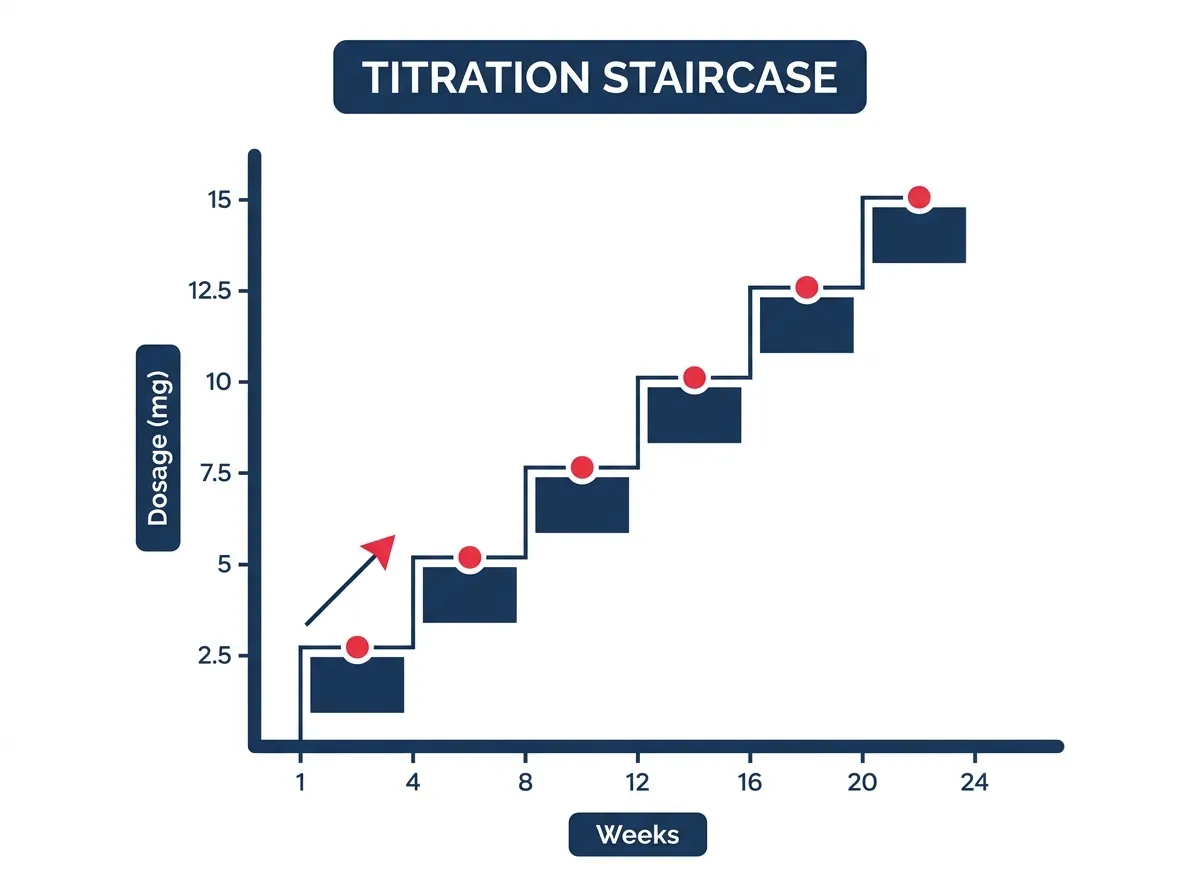
The FDA-approved tirzepatide titration schedule for both Mounjaro (type 2 diabetes) and Zepbound (weight management) follows a gradual dose-escalation pattern designed to minimise gastrointestinal side effects while building toward a therapeutic maintenance dose. The schedule below is based on the prescribing information approved by the FDA and supported by SURMOUNT phase III clinical trial data.

Weeks Dose Injection Freq Phase Expected Weight Loss
1–42.5 mgOnce weeklyInitiation1–3% of body weight
5–85.0 mgOnce weeklyEscalation3–6% cumulative
9–127.5 mgOnce weeklyEscalation5–10% cumulative
13–1610.0 mgOnce weeklyEscalation8–15% cumulative
17–2012.5 mgOnce weeklyMaintenance12–18% cumulative
21+15.0 mgOnce weeklyMax Maintenance15–22.5% cumulative

Not everyone needs to reach 15mg. SURMOUNT trial data shows that many participants achieved clinically meaningful weight loss (≥10% of body weight) at doses of 5–10mg weekly. Your maintenance dose is determined by your prescribing clinician based on your individual response and tolerance — not by a fixed escalation to maximum dose. Some patients find their ideal dose and remain there long-term.

How to Reconstitute Tirzepatide: Step-by-Step Guide
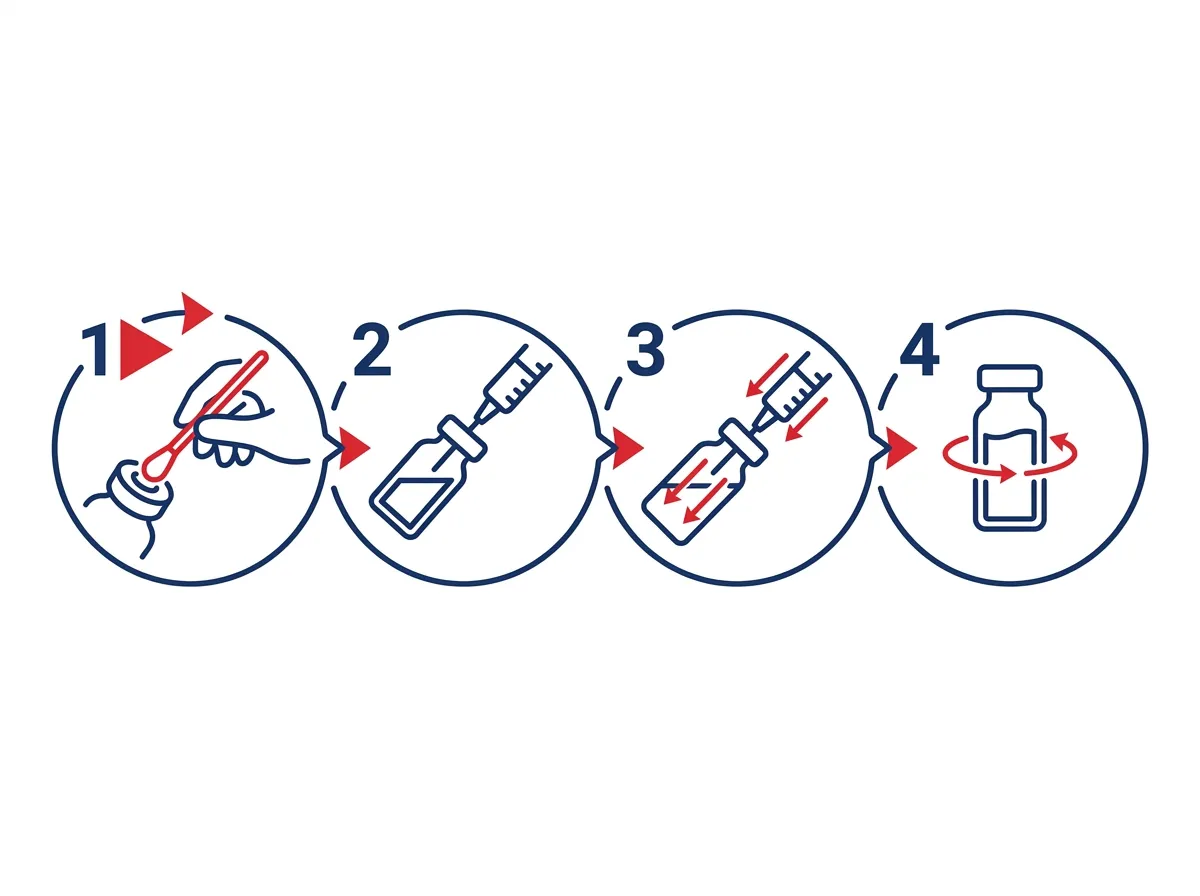
Compounded tirzepatide comes as a lyophilised (freeze-dried) powder that must be mixed with bacteriostatic water (BAC water) before injection. This process — called reconstitution — transforms the powder into a stable injectable solution. Getting the reconstitution right is critical because errors in BAC water volume directly change the concentration, which changes your syringe units and actual dose delivered.

1
Gather Your Supplies

You need: tirzepatide vial (lyophilised powder), bacteriostatic water (BAC water — not sterile water), U-100 insulin syringes, alcohol swabs (70% isopropyl), clean surface, and gloves if available. Never use tap water, saline, or sterile water — BAC water contains 0.9% benzyl alcohol which prevents bacterial growth across multiple uses.

2
Calculate Your BAC Water Volume

Use our reconstitution calculator above. The most common and practical approach is to choose a BAC water volume that gives you a clean, easy-to-draw concentration. For a 10mg vial: 2mL gives 5mg/mL (2.5mg = 50 units). For a 30mg vial: 3mL gives 10mg/mL (2.5mg = 25 units). Use the formula: Concentration = Vial mg ÷ BAC water mL.

3
Wipe and Prepare

Wash your hands thoroughly with soap for 20 seconds. Using a fresh alcohol swab, wipe the rubber stopper of both the tirzepatide vial and the BAC water vial. Allow 15 seconds to dry completely — alcohol must evaporate before puncturing or it can contaminate the solution.

4
Draw and Inject BAC Water

Draw your calculated BAC water volume into the syringe. Insert the needle into the tirzepatide vial at an angle so the tip touches the inside glass wall — not the powder directly. Inject the BAC water slowly down the glass wall so it trickles onto the powder without force. This is the most commonly skipped step: direct injection onto the powder can degrade the peptide structure.

5
Dissolve — Do Not Shake

Gently swirl the vial in slow circular motions. Never shake vigorously — mechanical agitation breaks peptide bonds and degrades the active compound. The powder typically dissolves within 1–5 minutes, resulting in a completely clear, colourless solution. If cloudiness persists after 10 minutes of gentle swirling, or if you see particles, do not use the vial.

6
Label and Refrigerate Immediately

Write the reconstitution date and concentration (e.g., "10mg/mL — reconstituted 15 May") on the vial with a label or marker. Store immediately in the refrigerator at 36–46°F (2–8°C). Reconstituted tirzepatide is stable for 28–60 days refrigerated. Never freeze reconstituted tirzepatide — freeze-thaw cycles damage the peptide. Never leave reconstituted tirzepatide at room temperature for extended periods.

How to Calculate Tirzepatide Dose — The Formula Explained

The tirzepatide dosage calculation converts your prescribed dose in milligrams (mg) into syringe units on a U-100 insulin syringe. Understanding the math helps you catch errors and calculate confidently when using compounded tirzepatide from any vial size.

Reconstitution and Concentration Formula

Step 1 — Calculate Concentration
Concentration (mg/mL) = Vial Size (mg) ÷ BAC Water (mL)
// 10mg vial + 2mL BAC water = 10 ÷ 2 = 5 mg/mL
// 30mg vial + 3mL BAC water = 30 ÷ 3 = 10 mg/mL

mg to Units Conversion Formula (U-100 Syringe)

Step 2 — Convert mg to Syringe Units
Units = (Dose mg ÷ Concentration mg/mL) × 100
// Example: 5mg dose, 10mg/mL concentration
// Units = (5 ÷ 10) × 100 = 50 units on U-100 syringe
// ⚠ A U-100 syringe = 1mL = 100 units. Never confuse unit type.

How Much BAC Water to Add — Working Backwards

Choosing BAC Water Volume for a Target Concentration
BAC Water (mL) = Vial mg ÷ Target Concentration (mg/mL)
// Want 5mg/mL from a 20mg vial? BAC = 20 ÷ 5 = 4mL
// Want 10mg/mL from a 60mg vial? BAC = 60 ÷ 10 = 6mL
// Tip: 5mg/mL and 10mg/mL are the most practical concentrations

Quick Reference: Common Tirzepatide Reconstitution Scenarios

Vial SizeBAC WaterConcentration2.5mg =5mg =7.5mg =10mg =
5 mg1 mL5 mg/mL50 units100 units
10 mg2 mL5 mg/mL50 units100 units
10 mg1 mL10 mg/mL25 units50 units75 units100 units
15 mg1.5 mL10 mg/mL25 units50 units75 units100 units
20 mg2 mL10 mg/mL25 units50 units75 units100 units
30 mg3 mL10 mg/mL25 units50 units75 units100 units
60 mg6 mL10 mg/mL25 units50 units75 units100 units

What Is Tirzepatide and How Does It Work?

Tirzepatide (brand names Mounjaro® and Zepbound®, developed by Eli Lilly) is a dual GIP/GLP-1 receptor agonist approved by the FDA in May 2022 for type 2 diabetes (Mounjaro) and November 2023 for chronic weight management (Zepbound). It is a once-weekly subcutaneous injection that simultaneously activates two incretin hormone pathways — GLP-1 (glucagon-like peptide-1) and GIP (glucose-dependent insulinotropic polypeptide) — producing combined metabolic effects that exceed single-agonist drugs like semaglutide.

22.5%
Max Weight Loss (72 wk)
~5 days
Half-Life
15mg
Max Weekly Dose
1×/wk
Injection Frequency

The SURMOUNT-1 phase III clinical trial — the largest obesity drug trial of its kind — showed that participants taking 15mg of tirzepatide weekly for 72 weeks lost an average of 22.5% of their body weight. A remarkable 91% of participants achieved at least 5% weight loss, and 57% achieved 20% or more — results that approach those seen only in bariatric surgery. Tirzepatide also improves insulin sensitivity, reduces HbA1c, lowers triglycerides, and can reduce blood pressure, making it a true cardiometabolic compound.

🔬
Dual Receptor Action

Tirzepatide is unique in targeting both GLP-1 and GIP receptors simultaneously. GLP-1 activation slows gastric emptying, reduces appetite, and improves insulin secretion. GIP activation enhances insulin release in a glucose-dependent manner and may improve fat cell metabolism. The combination produces greater weight loss than either mechanism alone.

⚖️
Tirzepatide vs Semaglutide

Head-to-head SURMOUNT-5 trial data (2024) showed tirzepatide produced 20.2% weight loss vs 13.7% with semaglutide 2.4mg — a 47% greater relative reduction. Tirzepatide also reaches a higher maximum dose and has superior effects on HbA1c, triglycerides, and waist circumference in most comparative analyses.

🩺
PCOS and Tirzepatide

Emerging evidence and off-label clinical use suggests tirzepatide may be particularly beneficial for women with PCOS (polycystic ovary syndrome), as insulin resistance is a central driver of PCOS pathophysiology. Weight loss of ≥10% can restore ovulatory cycles in many PCOS patients, and tirzepatide's insulin-sensitising effects may add benefit beyond weight loss alone.

🏃
Preserving Muscle Mass

Rapid weight loss on tirzepatide can include significant lean muscle mass loss — studies show 30–40% of weight lost may be lean tissue rather than fat. This is why protein intake recommendations are higher for GLP-1 users (1.2–2.0g/kg body weight) combined with resistance training 2–3 times per week. Our protein calculator above accounts for this.

Mounjaro vs Zepbound vs Compounded Tirzepatide — What's the Difference?

Many users searching for a tirzepatide calculator, reconstitution guide, or Mounjaro dosage calculator are working with compounded tirzepatide rather than brand-name products. It is important to understand the key differences — particularly around reconstitution, which only applies to compounded powder vials.

FeatureMounjaro® (Eli Lilly)Zepbound® (Eli Lilly)Compounded Tirzepatide
FDA Approval✓ Approved (T2D)✓ Approved (Obesity)Not FDA approved
FormPre-filled penPre-filled penLyophilised powder vial
Reconstitution NeededNoNoYes (BAC water)
Dose FlexibilityFixed doses onlyFixed doses onlyFully customizable
Typical Monthly Cost~$1,000–$1,200~$1,000–$1,200$200–$500
Active MoleculeTirzepatideTirzepatideTirzepatide
Quality AssuranceFDA-supervisedFDA-supervisedVaries by compounder
Purity VerificationStandardisedStandardisedRequires COA review
Regulatory Status (2025)Fully approvedFully approved503A/503B oversight

Important 2025 regulatory note: The FDA declared the tirzepatide shortage over in 2024, which placed restrictions on 503A compounding pharmacies. Compounded tirzepatide may still be available through 503B outsourcing facilities or under specific medical necessity criteria, but the legal landscape is evolving. Always source compounded tirzepatide from a licensed 503A/503B pharmacy with a valid Certificate of Analysis (COA) from third-party HPLC testing.

Tirzepatide Calculator — Frequently Asked Questions

How do you calculate tirzepatide dosage step by step? +
Step 1: Determine your vial size in mg (e.g. 10mg). Step 2: Decide how much BAC water to add — this determines your concentration. A common choice is 2mL for a 10mg vial, giving 5mg/mL. Step 3: Calculate your draw volume: Dose (mg) ÷ Concentration (mg/mL) = Volume (mL). For a 2.5mg dose at 5mg/mL: 2.5 ÷ 5 = 0.5mL. Step 4: Convert to U-100 insulin syringe units: 0.5mL × 100 = 50 units. Draw to the 50-unit mark on your U-100 insulin syringe. Use our tirzepatide reconstitution calculator above to do all this automatically.
What is the starting dose of tirzepatide for weight loss? +
The FDA-approved starting dose of tirzepatide for weight loss (Zepbound) is 2.5mg once weekly for the first 4 weeks. This initiation dose is below the therapeutic range and exists purely to help the body adjust before increasing. After 4 weeks, the dose is increased to 5mg weekly, then escalated in 2.5mg increments every 4 weeks as tolerated. The maximum approved dose is 15mg once weekly. Not all patients need to reach 15mg — many achieve their weight loss goals at 5–10mg.
How much BAC water should I add to a tirzepatide vial? +
The amount of bacteriostatic water you add determines your concentration, and the "best" amount depends on your vial size and target dose. A practical rule: aim for a 5 mg/mL or 10 mg/mL concentration because these produce clean unit numbers on a U-100 syringe. For a 10mg vial: 2mL BAC water = 5mg/mL (2.5mg = 50 units, 5mg = 100 units). For a 30mg vial: 3mL BAC water = 10mg/mL (2.5mg = 25 units, 5mg = 50 units, 10mg = 100 units). Use the tirzepatide BAC water calculator above to compute exact volumes for any vial size.
How many units is 2.5mg of tirzepatide on an insulin syringe? +
This depends entirely on your reconstitution concentration. It is not a fixed number. At 5mg/mL concentration: 2.5mg = 50 units. At 10mg/mL concentration: 2.5mg = 25 units. At 2.5mg/mL concentration: 2.5mg = 100 units. This is the most critical thing to understand when using a tirzepatide dosage calculator in units — you must always know your specific vial's concentration before drawing. If you are unsure of your concentration, never guess. Use our calculator above with your exact vial size and BAC water volume.
What is the difference between Mounjaro and Zepbound? +
Mounjaro and Zepbound contain the same active ingredient — tirzepatide — at the same doses (2.5mg to 15mg). The difference is their FDA-approved indication: Mounjaro is approved for type 2 diabetes management, while Zepbound is approved for chronic weight management in adults with obesity (BMI ≥30) or overweight (BMI ≥27) with at least one weight-related condition. In practice, many insurers cover Mounjaro for diabetes and Zepbound for obesity. The clinical effect, titration schedule, side effect profile, and mechanism of action are identical.
Can I calculate tirzepatide dose based on body weight (mg/kg)? +
The FDA-approved tirzepatide dosing is not weight-based — it uses fixed doses for all adult patients regardless of body weight (2.5mg to 15mg weekly). This differs from some other medications. However, body weight does indirectly affect how many doses a vial contains, since heavier individuals who require more frequent dose escalation may go through vials faster. Our tirzepatide weight loss calculator uses SURMOUNT trial data stratified by dose — not body weight — to project outcomes.
Does tirzepatide dosage differ for women vs men? +
The FDA-approved tirzepatide dosing protocol is the same for men and women — starting at 2.5mg and escalating to a maximum of 15mg. No gender-specific dosing adjustment is required or recommended. However, SURMOUNT trial data showed that women tended to lose slightly more body weight percentage than men on average, possibly reflecting differences in baseline BMI, hormonal factors, and body composition. Women with PCOS may experience additional benefits beyond weight loss due to tirzepatide's insulin-sensitising effects.
How long does tirzepatide take to show weight loss results? +
Most people notice reduced appetite within the first 1–2 weeks at 2.5mg, though this initial dose is sub-therapeutic for weight loss. Measurable scale weight reduction typically begins in weeks 4–8 as the dose increases to 5mg. The most significant weight loss acceleration occurs as doses reach 7.5–10mg (weeks 9–16 for those following the standard titration). SURMOUNT-1 trial data shows approximately 10% body weight reduction by 24 weeks and 20%+ by 72 weeks at 15mg. Individual timelines vary based on diet, activity, and metabolic response.
What is the tirzepatide half-life and when is steady state reached? +
Tirzepatide has a terminal half-life of approximately 5 days (120 hours). Steady-state plasma concentrations — where the amount being absorbed equals the amount being eliminated — are reached after approximately 4–5 half-lives of consistent dosing, which is roughly 3–5 weeks of weekly injections. This is why the titration schedule keeps patients at each dose level for at least 4 weeks before escalating: the body needs time to reach steady-state exposure at each dose before assessing full effect. After stopping tirzepatide, drug clearance takes approximately 5 half-lives (~25 days) for most of the drug to be eliminated.
Can I use the tirzepatide calculator for Mounjaro pens? +
No. The reconstitution and mg-to-units calculators on this page are designed specifically for compounded tirzepatide in lyophilised powder vials. FDA-approved brand-name Mounjaro and Zepbound autoinjector pens deliver pre-measured, fixed doses directly — no reconstitution is needed, and the dose is pre-set inside the pen. If you are using a brand-name pen, simply set the dial to your prescribed dose and inject. If you are using a compounded vial from a pharmacy, use our reconstitution calculator to determine exact syringe units.
What is the maximum safe dose of tirzepatide? +
The maximum FDA-approved dose of tirzepatide is 15mg once weekly. Clinical trials tested doses up to 15mg and did not evaluate higher doses in large-scale efficacy trials. Some compounded protocols exceed this, but doses above 15mg have not been validated for safety or efficacy in rigorous clinical trials and are outside the approved prescribing information. Taking more tirzepatide than prescribed does not proportionally increase weight loss and significantly increases the risk of severe gastrointestinal side effects, hypoglycaemia, pancreatitis, and other complications.
What are the common side effects of tirzepatide? +
The most common side effects of tirzepatide are gastrointestinal: nausea (reported in 20–30% of patients), diarrhoea, vomiting, constipation, abdominal pain, and reduced appetite. These effects are most pronounced during dose escalation and typically decrease after 2–4 weeks at each dose level. Serious but rare side effects include pancreatitis, gallbladder disease (including cholelithiasis), hypoglycaemia (especially in patients on sulfonylureas or insulin), and potential thyroid C-cell tumours (based on rodent studies — human risk unknown). Tirzepatide is contraindicated in patients with a personal or family history of medullary thyroid carcinoma or Multiple Endocrine Neoplasia syndrome type 2.
How do I know if my tirzepatide has been stored correctly? +
Reconstituted tirzepatide solution should always be clear and colourless. Discard the vial immediately if you see: cloudiness or turbidity, visible particles or precipitate, colour change (yellow or brown tint), or if the vial has been left unrefrigerated for more than a few hours. Lyophilised (un-reconstituted) powder should be stored at room temperature or refrigerated (follow your supplier's instructions) and protected from light. Once reconstituted, refrigerate at 36–46°F (2–8°C) at all times and use within 28–60 days. Never freeze reconstituted tirzepatide.
Is tirzepatide better than semaglutide for weight loss? +
Based on the head-to-head SURMOUNT-5 clinical trial, tirzepatide at 10–15mg produced approximately 20.2% body weight reduction compared to 13.7% with semaglutide 2.4mg (Wegovy) at 72 weeks — a statistically significant 47% greater relative reduction. Tirzepatide's advantage comes from its dual GIP/GLP-1 mechanism versus semaglutide's single GLP-1 pathway. However, individual responses vary significantly: some patients respond better to semaglutide, and tolerability, insurance coverage, and access all factor into the clinical decision. Your prescribing physician can help determine which agent is most appropriate for your specific situation.
How do I use the tirzepatide reconstitution calculator? +
Using our tirzepatide reconstitution calculator is straightforward. Select the Reconstitution tab above. Choose your vial size using the quick preset buttons (5, 10, 15, 20, 30, or 60mg), or type a custom amount. Enter the volume of bacteriostatic water you plan to add (in mL). Enter your desired weekly dose (in mg). Click Calculate Reconstitution. The calculator instantly shows you: exact syringe units to draw on a U-100 insulin syringe, the resulting concentration in mg/mL, the draw volume in mL, the number of doses per vial, and mcg per unit. The syringe visual updates to show your fill level, and the titration timeline highlights your current dose step.
What protein intake is recommended while taking tirzepatide? +
People using tirzepatide require significantly higher protein intake than the standard RDA (0.8g/kg) to preserve lean muscle mass during rapid weight loss. Research suggests GLP-1 medication users should target 1.2–2.0g of protein per kilogram of body weight per day, depending on activity level. Sedentary individuals should aim for at least 1.2g/kg. Those doing regular resistance training should target 1.6–2.0g/kg. Without adequate protein, 30–40% of weight lost on tirzepatide can come from muscle rather than fat, which reduces metabolic rate and compromises long-term weight maintenance. Use our tirzepatide protein calculator above to get your personalised target.
Is tirzepatide safe for people with PCOS? +
Tirzepatide is not currently FDA-approved specifically for PCOS, but it is being used off-label for PCOS-related insulin resistance and weight management in clinical practice. The dual GIP/GLP-1 mechanism addresses two key drivers of PCOS: insulin resistance and excess body weight. Case reports and small studies show improvements in menstrual regularity, androgen levels, and metabolic markers in PCOS patients treated with tirzepatide or similar GLP-1 agents. Randomised controlled trials specifically in PCOS patients are ongoing. If you have PCOS and are considering tirzepatide, consult an endocrinologist or reproductive endocrinologist for guidance.
What should I do if I miss a tirzepatide injection? +
If you miss a tirzepatide dose, take it as soon as you remember — provided the next scheduled dose is at least 4 days (96 hours) away. If your next scheduled dose is within 4 days, skip the missed dose and resume your regular weekly schedule. Never take two doses in the same week to make up for a missed dose. Tirzepatide's 5-day half-life means a single missed dose typically has a modest pharmacokinetic impact, especially at steady state. However, missing doses consistently can slow progress and disrupt titration. Set a weekly reminder on your phone to avoid missed injections.
Can I use this tirzepatide calculator for a 60mg vial? +
Yes. Our tirzepatide reconstitution calculator works with any vial size from 1mg to 200mg — simply select the 60mg preset button or type 60 into the vial size field. For a 60mg vial, a commonly used reconstitution is 6mL BAC water for a 10mg/mL concentration, giving clean unit numbers at all standard doses (2.5mg = 25 units, 5mg = 50 units, 10mg = 100 units). Note that a 60mg vial holds 12 weeks of 5mg doses or 6 weeks of 10mg doses — always ensure you use reconstituted tirzepatide within 28–60 days of mixing and plan your vial size accordingly.
Why does my tirzepatide calculator show different units than I expected? +
The most common reason units look unexpected is a mismatch between what you think your concentration is and what it actually is. Remember: the calculator's output is only correct if you enter the exact amount of BAC water you actually added to your specific vial. If you entered 2mL but actually added 1mL, the concentration is double what the calculator assumed — meaning your units would need to be halved. Other common mistakes: confusing vial total mg with per-mL concentration, assuming a standard BAC water volume that differs from what your pharmacist recommended, or mixing up U-100 vs U-40 syringe scales. When in doubt, ask your pharmacist to confirm your vial concentration in writing.

Tirzepatide Calculator Key Takeaways

Syringe units depend on your specific concentration — never assume a standard unit count without calculating for your exact vial and BAC water volume.
10mg/mL is the most practical concentration for most vial sizes — it gives clean unit numbers at all standard tirzepatide doses.
Never shake reconstituted tirzepatide — swirl gently and always inject BAC water down the glass wall, not onto the powder directly.
Reconstituted tirzepatide is stable for 28–60 days refrigerated. Never freeze it after mixing.
Protein intake of at least 1.2–1.6g/kg/day is essential on tirzepatide to preserve muscle mass during rapid weight loss. Use our protein calculator.
🩺
Dr. Heart (Health Observer)
Cardiovascular & Metabolic Health Specialist

All tirzepatide dosing data on this page is sourced from FDA prescribing information for Mounjaro and Zepbound, SURMOUNT-1/2/3/4 phase III clinical trial publications, and peer-reviewed pharmacokinetic studies. Reconstitution formulas follow standard pharmaceutical compounding mathematics. This page is for educational purposes and does not constitute medical advice. Always consult your prescribing provider before adjusting any medication dose.